Biotechnological intervention has transformed the vaccination technology' – Discuss.
In short
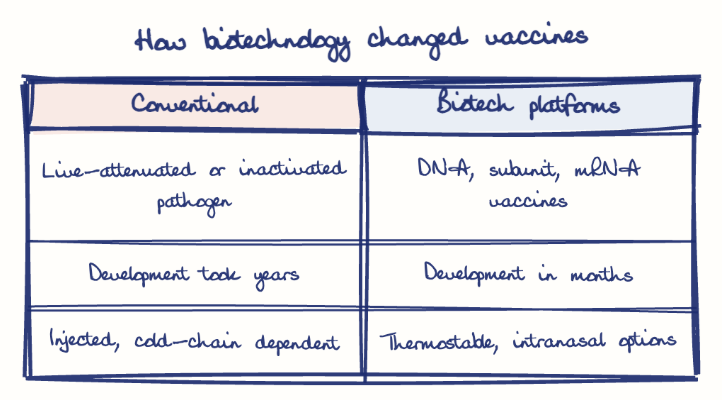
Biotechnology has transformed vaccination by replacing slow whole-pathogen methods with DNA, protein sub-unit and mRNA platforms that are faster, safer and more precise. India's ZyCoV-D, CORBEVAX, GEMCOVAC-19 and the intranasal iNCOVACC show the shift, though regulatory delays and weak public-private links still limit it.
Model answer
Ghissu Editorial · Verified 4 Oct 2026 · 256 words
Clinical Trial Infrastructure
India’s 54 clinical trial sites, including Andhra Pradesh, equipped with Good Clinical Practice (GCP) compliance and electronic data capture systems, enable rapid vaccine testing and real-time safety monitoring. This network supports accelerated vaccine development and robust data collection.
Bioinformatics and Genomic Surveillance
Integration of bioinformatics with biotechnology allows genome sequencing of pathogens and hosts, aiding vaccine design tailored to genetic diversity. The Department of Biotechnology’s One Day One Genome project enhances understanding of population genetics, critical for vaccine efficacy in diverse regions like Andhra Pradesh.
Improved Efficacy and Accessibility
Bharat Biotech’s Covaxin, which received WHO emergency use listing after rigorous trials, and thermostable intranasal vaccines like iNCOVACC improve immunogenicity and simplify storage and administration. These advances support India’s Universal Immunisation Programme, which annually reaches 2.9 crore pregnant women and 2.54 crore newborns.
This model answer is indicative and the model can make mistakes; please verify key facts independently.
Sources
Practise this question
1Get the answer sheet
Sized for this question.
2Write your answer
Timed, by hand.
3Get it marked
Your score and what to fix.
This chapter in the exam
Human diseases; genetic engineering basics; biotechnology in agriculture; vaccines54 questions
Asked in 8 of 8 sittings since 2008
Most tested: Vaccines and immunisation, alongside GM crops/biotech agriculture.
- 2025Discuss the transmission dynamics of respiratory tract infections in densely populated urban settings. Propose effective public health strategies for their prevention.
- 2025Examine how urban infrastructure influences the implementation of preventive measures during microbial disease outbreaks. Suggest technology-driven solutions.
All 54 questions, sorted by sub-topic, with model answers and practice.
Question from the official APPSC Group-I Mains 2016 paper. Answer written by Ghissu's engine and checked against our editorial standards. Found an error? Tell us and we correct it within 48 hours.