Describe Impact of Ozone layer depletion on different living organisms?
In short
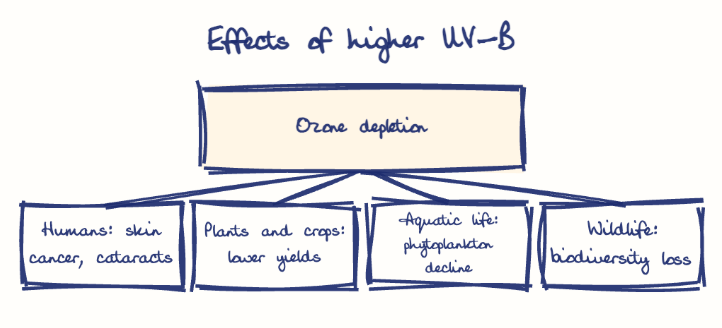
Ozone depletion lets more UV-B radiation reach the surface, causing skin cancer, cataracts and weaker immunity in humans, damaging plant DNA and crop yields, and killing phytoplankton that sustain aquatic food webs. In Andhra Pradesh this threatens chilli and horticulture crops and the fisheries along its 974 km coastline.
Model answer
Ghissu Editorial · Verified 4 Oct 2026 · 305 words
Human Health Risks
Increased UV-B causes skin cancers, cataracts, and immune suppression, impacting public health in Andhra Pradesh's Rayalaseema drought belt with poor healthcare access. The World Health Organization links UV exposure to a rise in melanoma and non-melanoma skin cancers globally.
Crop Damage and Food Security
UV radiation damages plant DNA and photosynthesis, reducing yields of chilli and horticultural crops vital to Andhra Pradesh's agrarian economy. Studies show UV-B reduces nutrient content and growth rates, threatening food security and farmer incomes.
Biodiversity Impact
UV-induced genetic mutations disrupt wildlife in Andhra Pradesh's Eastern Ghats, undermining conservation efforts. Species reproductive failures and altered behaviors threaten ecosystem stability in this biodiversity hotspot.
Regulatory Enforcement Gaps
India’s Ozone Depleting Substances (Regulation and Control) Rules, 2000, face enforcement issues in Andhra Pradesh, especially informal sectors where illegal use persists. The Montreal Protocol’s success depends on strict local compliance.
Climate Change Interactions
Ozone depletion worsens climate impacts, complicating disaster management in Andhra Pradesh with erratic rainfall and temperature shifts. This synergy stresses agriculture and water resources, increasing vulnerability.
This model answer is indicative and the model can make mistakes; please verify key facts independently.
Practise this question
1Get the answer sheet
Sized for this question.
2Write your answer
Timed, by hand.
3Get it marked
Your score and what to fix.
This chapter in the exam
Pollution & solid waste; global issues; environmental legislation; disaster management policy; agricultural revolutions43 questions
Asked in 8 of 8 sittings since 2008
Most tested: Solid waste management and pollution-control legislation
- 2025What are the key principles of Integrated Solid Waste Management (ISWM)? Discuss the role of waste hierarchy in ISWM.
- 2025Define global warming, and differentiate it clearly from climate change. Explain the key natural and human-induced causes of global warming and briefly discuss which factors are currently dominant in driving global temperature rise.
All 43 questions, sorted by sub-topic, with model answers and practice.
Question from the official APPSC Group-I Mains 2016 paper. Answer written by Ghissu's engine and checked against our editorial standards. Found an error? Tell us and we correct it within 48 hours.