Describe noise pollution and explain the various control and preventive measures to be taken to control noise pollution.
In short
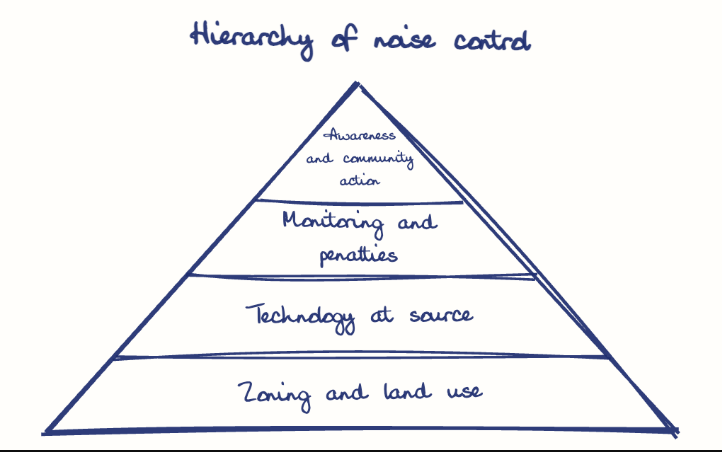
Noise pollution is excessive, unwanted sound measured in decibels that causes hearing loss, stress and hypertension, and the Supreme Court treats freedom from it as part of Article 21. It is controlled through the Noise Pollution (Regulation and Control) Rules, 2000, silence zones, quieter machinery, monitoring, penalties and awareness.
Model answer
Ghissu Editorial · Verified 4 Oct 2026 · 253 words
Noise Pollution Rules1 and Judicial Support
The Noise Pollution (Regulation and Control) Rules, 2000, categorize zones with permissible limits; the Supreme Court enforces these under Article 21, and High Courts have repeatedly ordered stricter enforcement.
Role of Pollution Control Boards
Bodies like the Andhra Pradesh Pollution Control Board monitor noise levels and enforce standards, though enforcement gaps persist due to resource constraints.
Sources and Effects
Industrial and vehicular noise, especially in urban areas like Visakhapatnam and Vijayawada, cause hearing loss and stress; poor zoning and machinery maintenance worsen noise levels.
Public Awareness and Enforcement Issues
Low awareness and weak enforcement hinder noise control despite legal provisions.
Zoning and Technology
Strict zoning separating industrial and residential areas, soundproofing, and promoting electric vehicles in cities like Amaravati reduce noise at the source.
Monitoring and Community Engagement
Use of noise sensors, real-time data, and public campaigns before festivals improve compliance and awareness.
Strengthening Institutions and Urban Planning
Enhancing the capacity of the Andhra Pradesh Pollution Control Board and integrating noise control in urban master plans are crucial.
Community Initiatives and Technology
Encouraging Resident Welfare Associations and deploying GIS mapping for noise hotspots will aid enforcement.
This model answer is indicative and the model can make mistakes; please verify key facts independently.
Practise this question
1Get the answer sheet
Sized for this question.
2Write your answer
Timed, by hand.
3Get it marked
Your score and what to fix.
This chapter in the exam
Pollution & solid waste; global issues; environmental legislation; disaster management policy; agricultural revolutions43 questions
Asked in 8 of 8 sittings since 2008
Most tested: Solid waste management and pollution-control legislation
- 2025What are the key principles of Integrated Solid Waste Management (ISWM)? Discuss the role of waste hierarchy in ISWM.
- 2025Define global warming, and differentiate it clearly from climate change. Explain the key natural and human-induced causes of global warming and briefly discuss which factors are currently dominant in driving global temperature rise.
All 43 questions, sorted by sub-topic, with model answers and practice.
Question from the official APPSC Group-I Mains 2016 paper. Answer written by Ghissu's engine and checked against our editorial standards. Found an error? Tell us and we correct it within 48 hours.