Discuss the scope of renewable energy in the scenario of energy crisis?
In short
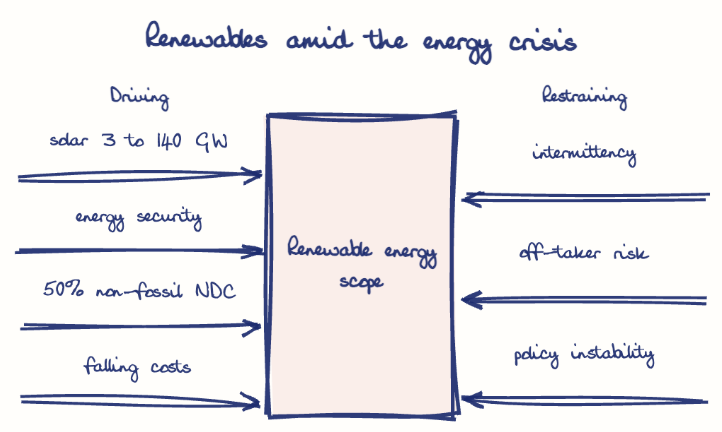
Renewable energy has wide scope in an energy crisis because it cuts dependence on volatile fuel imports, lowers emissions and powers remote areas. India's solar capacity rose from 3 GW in 2014 to 140 GW by January 2026, and non-fossil sources now form about half of installed capacity.
Model answer
Ghissu Editorial · Verified 4 Oct 2026 · 255 words
Surging Capacity and Diversification
India’s solar capacity soared from 3 GW (2014) to 140 GW (2026), with wind at 54.65 GW; large projects include 55 solar parks and the National Green Hydrogen Mission2 aiming for 5 million tonnes by 2030. This diversification reduces reliance on fossil fuels and promotes cleaner energy sources.
Energy Security and Regional Impact
Non-fossil sources now form about half of installed capacity, reducing fossil fuel imports; Andhra Pradesh’s Renewable Purchase Obligation and Renewable Energy Certificates have strengthened local demand and investment. Additionally, these mechanisms have encouraged private sector participation, enhancing regional energy resilience.
Socioeconomic Benefits and Climate Goals
Renewables support India’s net-zero targets with solar and wind projected to form 90-98% of capacity by 2070; Andhra Pradesh’s PM-KUSUM rural solar initiatives improve energy access and agriculture. These initiatives also promote rural employment and reduce energy poverty, contributing to inclusive growth.
Decentralization and Indigenous Innovation
Promote off-grid renewables and boost domestic R&D for Atmanirbhar Bharat. Supporting local manufacturing will reduce import dependence and foster technological self-reliance.
This model answer is indicative and the model can make mistakes; please verify key facts independently.
Practise this question
1Get the answer sheet
Sized for this question.
2Write your answer
Timed, by hand.
3Get it marked
Your score and what to fix.
This chapter in the exam
Energy: needs, resources, policy; Nuclear programme and policy24 questions
Asked in 8 of 8 sittings since 2008
Most tested: Renewable energy transition in India, especially solar/clean energy and barriers to large-scale adoption.
- 2025Differentiate between conventional and non-conventional energy resources. Explain their relevance in India's energy sector.
- 2023What is the current scenario of renewable power generation in India ? Discuss the factors responsible for the growing focus and shift towards Renewable energy.
All 24 questions, sorted by sub-topic, with model answers and practice.
Question from the official APPSC Group-I Mains 2016 paper. Answer written by Ghissu's engine and checked against our editorial standards. Found an error? Tell us and we correct it within 48 hours.