Give an account of the following: (i) Autotrophic Vs. Heterotrophic plants (ii) Symbiosis
In short
Autotrophic plants make their own food by photosynthesis and form the base of food chains, while heterotrophic plants, such as parasitic and insectivorous plants, depend on other organisms. Symbiosis is a mutually beneficial association, such as legumes with nitrogen-fixing Rhizobium or mycorrhizal fungi with roots, that sustains soil fertility.
Model answer
Ghissu Editorial · Verified 4 Oct 2026 · 311 words
Policy and Extension
Schemes like Soil Health Card and M-KISAN promote awareness and encourage adoption of symbiosis-based farming practices among small and marginal farmers.
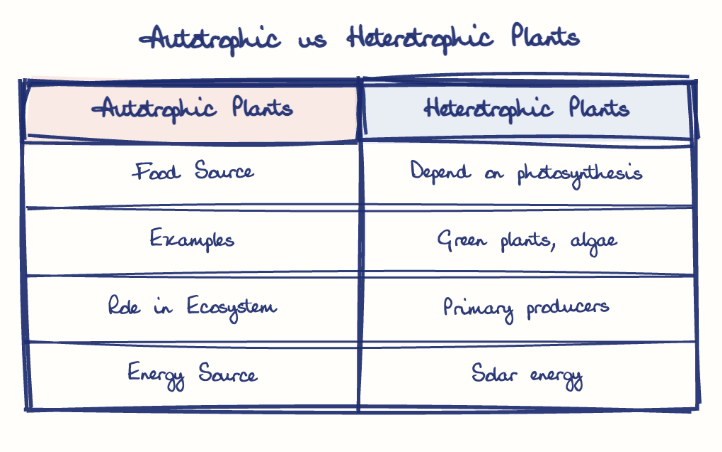
Autotrophic vs. Heterotrophic Plants
Autotrophs (green plants, algae) synthesize food via photosynthesis using sunlight and carbon dioxide, forming primary producers in ecosystems; heterotrophs (parasitic, insectivorous plants) depend on other organisms for nutrition, affecting their ecological roles and management strategies.
Symbiosis Benefits
Nitrogen-fixing bacteria in legumes improve soil fertility by converting atmospheric nitrogen into usable forms, especially vital in Rayalaseema’s drought-prone regions, reducing reliance on chemical fertilizers and enhancing soil health.
Economic and Environmental Impact
Symbiosis lowers fertilizer costs, boosts yields in Andhra Pradesh’s pulse and horticulture sectors, and supports soil conservation efforts in Rayalaseema and coastal Andhra by maintaining soil organic matter and microbial diversity.
Enhance R&D and Education
Increase funding for symbiosis research and biofertilizer development, and expand farmer extension services to promote sustainable, climate-resilient agricultural practices across Andhra Pradesh.
Strengthen Policy Support
Integrate symbiosis-focused strategies into state agricultural policies and incentivize eco-friendly farming to improve adoption and long-term soil fertility.
This model answer is indicative and the model can make mistakes; please verify key facts independently.
Sources
Practise this question
1Get the answer sheet
Sized for this question.
2Write your answer
Timed, by hand.
3Get it marked
Your score and what to fix.
This chapter in the exam
Biotechnology & Nanotechnology: scope, ethics, genetic engineering, biodiversity, fermentation, immuno-diagnosis50 questions
Asked in 8 of 8 sittings since 2008
Most tested: Biodiversity and biotechnology governance/ethics, especially conservation, GMOs, and applied public-health biotech.
- 2025Trace the evolution of India's National Biotechnology Development Strategy (NBDS) and discuss its key objectives. Critically evaluate its impact on the growth of the biotechnology sector in India.
- 2025Analyze the potential of plant-derived biopharmaceuticals in promoting sustainable healthcare. Explain how the application of green pharmacy principles can help minimize environmental harm at each stage of the pharmaceutical lifecycle.
All 50 questions, sorted by sub-topic, with model answers and practice.
Question from the official APPSC Group-I Mains 2016 paper. Answer written by Ghissu's engine and checked against our editorial standards. Found an error? Tell us and we correct it within 48 hours.