Narrate the impact of urbanisation on bio-diversity.
In short
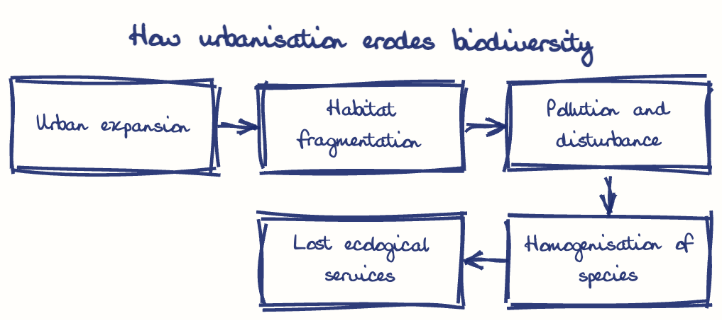
Urbanisation harms biodiversity by destroying and fragmenting habitats, favouring generalists like the house crow and feral pigeon over specialist species, and adding air, noise and light pollution. Studies such as the State of India's Birds 2023 show the most urbanised areas have the lowest bird diversity.
Model answer
Ghissu Editorial · Verified 4 Oct 2026 · 261 words
Species Homogenisation
Urban areas favour generalists such as house crow and feral rock pigeon, causing native species decline and reduced ecosystem resilience. This homogenisation undermines ecological stability by reducing species diversity.
Species Decline Correlation
Highly urbanised areas show the lowest bird diversity, including rare insectivores, linking urbanisation intensity to biodiversity loss. The decline of specialist species is well documented in Indian cities.
Ecological Function Disruption
Declines in birds affect seed dispersal, pollination, and pest control, harming ecosystem health. This disruption threatens ecosystem services vital for agriculture and human well-being.
Native Vegetation in Urban Planning
Incorporate native flora to support local wildlife, as recommended by conservation reports like the National Biodiversity Action Plan.
Urban Biodiversity Monitoring
Conduct studies in cities like Visakhapatnam to guide conservation, enabling data-driven policies.
Green Infrastructure
Create green corridors and interconnected parks to reduce habitat fragmentation and facilitate species movement.
Domestic Animal Regulation
Control free-ranging pets through awareness and policy to mitigate predation on urban wildlife, addressing a key but under-researched threat.
This model answer is indicative and the model can make mistakes; please verify key facts independently.
Practise this question
1Get the answer sheet
Sized for this question.
2Write your answer
Timed, by hand.
3Get it marked
Your score and what to fix.
This chapter in the exam
Biotechnology & Nanotechnology: scope, ethics, genetic engineering, biodiversity, fermentation, immuno-diagnosis50 questions
Asked in 8 of 8 sittings since 2008
Most tested: Biodiversity and biotechnology governance/ethics, especially conservation, GMOs, and applied public-health biotech.
- 2025Trace the evolution of India's National Biotechnology Development Strategy (NBDS) and discuss its key objectives. Critically evaluate its impact on the growth of the biotechnology sector in India.
- 2025Analyze the potential of plant-derived biopharmaceuticals in promoting sustainable healthcare. Explain how the application of green pharmacy principles can help minimize environmental harm at each stage of the pharmaceutical lifecycle.
All 50 questions, sorted by sub-topic, with model answers and practice.
Question from the official APPSC Group-I Mains 2016 paper. Answer written by Ghissu's engine and checked against our editorial standards. Found an error? Tell us and we correct it within 48 hours.