What is DNA Finger Printing? Explain how it is done. Write its forensic applications.
In short
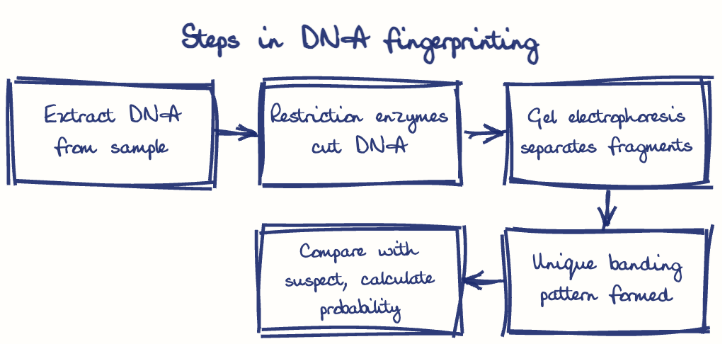
DNA fingerprinting identifies individuals by unique DNA patterns, made by extracting DNA from blood, hair or saliva, cutting or amplifying variable repeat regions, separating fragments by gel electrophoresis and comparing bands statistically. Forensically, it identifies criminals in rape and murder cases, settles paternity disputes and identifies disaster victims.
Model answer
Ghissu Editorial · Verified 4 Oct 2026 · 279 words
Forensic Science Laboratories Network
Andhra Pradesh’s forensic labs, connected to the Central Forensic Science Laboratory in Hyderabad, provide accurate DNA profiling for criminal and civil cases, ensuring timely and reliable results.
Regulatory and Legal Support
The DNA Technology (Use and Application) Regulation Bill proposed legal standards for DNA data collection and privacy but was withdrawn in 2023, leaving a gap that a fresh law should fill.
Sample Collection Protocols
Andhra Pradesh enforces strict protocols with witnesses, including law enforcement and community representatives, to maintain chain of custody and prevent tampering, ensuring the integrity of forensic evidence.
Criminal and Disaster Cases
DNA fingerprinting aids in convicting perpetrators and identifying disaster victims, providing closure in Andhra Pradesh, as seen in high-profile rape and murder cases.
Paternity and Missing Persons
It resolves parentage disputes and identifies missing persons, notably in Rayalaseema, where migration and displacement complicate identification efforts.
Infrastructure and Training
Expanding DNA labs and enhancing training at state universities and forensic institutions will improve forensic capabilities and address skill gaps in DNA fingerprinting techniques.
Digital Integration
Implementing ICJS will streamline evidence sharing among police, courts, and labs, improving case management efficiency and forensic coordination.
This model answer is indicative and the model can make mistakes; please verify key facts independently.
Sources
Practise this question
1Get the answer sheet
Sized for this question.
2Write your answer
Timed, by hand.
3Get it marked
Your score and what to fix.
This chapter in the exam
Human diseases; genetic engineering basics; biotechnology in agriculture; vaccines54 questions
Asked in 8 of 8 sittings since 2008
Most tested: Vaccines and immunisation, alongside GM crops/biotech agriculture.
- 2025Discuss the transmission dynamics of respiratory tract infections in densely populated urban settings. Propose effective public health strategies for their prevention.
- 2025Examine how urban infrastructure influences the implementation of preventive measures during microbial disease outbreaks. Suggest technology-driven solutions.
All 54 questions, sorted by sub-topic, with model answers and practice.
Question from the official APPSC Group-I Mains 2016 paper. Answer written by Ghissu's engine and checked against our editorial standards. Found an error? Tell us and we correct it within 48 hours.