What is Soil Pollution and how it is caused?
In short
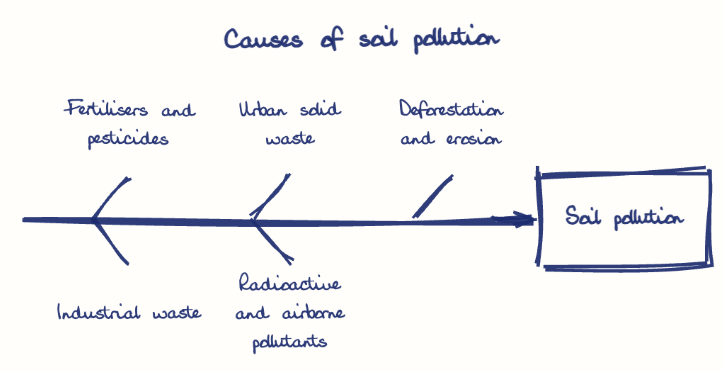
Soil pollution is the addition of harmful substances that degrade soil's physical, chemical and biological properties, reducing fertility and entering the food chain. It is caused by excessive fertilisers and pesticides, industrial waste with heavy metals, urban solid waste and sludge, radioactive waste, acid rain and erosion after deforestation.
Model answer
Ghissu Editorial · Verified 4 Oct 2026 · 255 words
Soil Pollution Defined
Soil pollution alters physical, chemical, and biological soil properties, reducing fertility and causing bioaccumulation of toxins that enter the food chain.
Chemical Fertilizers and Pesticides
Indiscriminate use of pesticides, such as endosulfan in Kerala’s cashew plantations before its 2011 ban and heavy spraying on chilli and cotton in Andhra Pradesh, and of chemical fertilizers disrupts soil microbes, increase salinity, and degrade soil quality.
Industrial and Urban Waste
Industrial effluents containing heavy metals near Visakhapatnam and urban solid waste in Vijayawada and Guntur contaminate soil and groundwater.
Deforestation and Soil Erosion
In drought-prone Rayalaseema, deforestation and soil erosion remove protective vegetation, increasing vulnerability to pollutants and worsening soil degradation.
Organic Farming and Regulation
Promote organic manures and balanced fertiliser use under the Soil Health Card scheme; enforce zero liquid discharge norms in industrial clusters to prevent toxic waste dumping.
Urban Waste and Conservation
Improve urban waste management and afforestation in drought-prone Rayalaseema through contour bunding and watershed management to prevent erosion and maintain soil health, aligning with the environmental dimension of sustainable development.
This model answer is indicative and the model can make mistakes; please verify key facts independently.
Sources
Practise this question
1Get the answer sheet
Sized for this question.
2Write your answer
Timed, by hand.
3Get it marked
Your score and what to fix.
This chapter in the exam
Pollution & solid waste; global issues; environmental legislation; disaster management policy; agricultural revolutions43 questions
Asked in 8 of 8 sittings since 2008
Most tested: Solid waste management and pollution-control legislation
- 2025What are the key principles of Integrated Solid Waste Management (ISWM)? Discuss the role of waste hierarchy in ISWM.
- 2025Define global warming, and differentiate it clearly from climate change. Explain the key natural and human-induced causes of global warming and briefly discuss which factors are currently dominant in driving global temperature rise.
All 43 questions, sorted by sub-topic, with model answers and practice.
Question from the official APPSC Group-I Mains 2016 paper. Answer written by Ghissu's engine and checked against our editorial standards. Found an error? Tell us and we correct it within 48 hours.