What is yeast fermentation? Explain industrial use of yeast in making different products?
In short
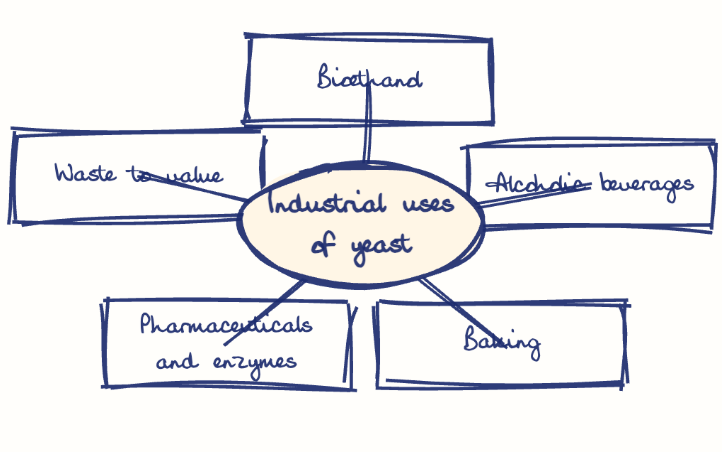
Yeast fermentation is the conversion of sugars into ethanol and carbon dioxide by yeasts such as Saccharomyces cerevisiae under controlled temperature and pH. Industry uses it to make bioethanol for petrol blending, wine, beer and spirits, baker's yeast for bread, and enzymes and other pharmaceutical compounds.
Model answer
Ghissu Editorial · Verified 4 Oct 2026 · 270 words
Research and Innovation
Sri Venkateswara University and state biotech centres lead yeast strain development, fostering bioethanol and food industry advances through cutting-edge molecular biology techniques.
Policy and Partnerships
State alignment with the National Bio-Energy Mission and public-private collaborations in Visakhapatnam’s industrial corridor promote yeast biotechnology commercialization and infrastructure development.
Substrate and Scale Issues
Variability in sugar substrates in Rayalaseema’s drought-prone areas and capital-intensive scale-up limit fermentation efficiency and consistent product yield.
Product Diversity and Impact
Yeast fermentation supports bioethanol, alcoholic beverages (local wines in Nellore), baker’s yeast, and pharmaceuticals, boosting rural employment, agro-industrial growth, and reducing agro-waste pollution.
Bioethanol and Beverages
Yeast ferments sugarcane and fruit residues into ethanol for fuel blending under national mandates and produces quality alcoholic drinks with enhanced aroma and taste.
Baking and Pharmaceuticals
Baker’s yeast supports urban food processing in centers like Vijayawada, while yeast strains in Visakhapatnam enable industrial enzyme and antibiotic production, contributing to the pharmaceutical sector.
R&D and Agro-Residue Use
Invest in yeast strain improvement at state biotech centers to develop robust strains tolerant to local conditions and establish fermentation units near agricultural hubs to convert residues into value-added products.
Skill Development and Linkages
Strengthen industry-academia partnerships in Visakhapatnam’s industrial corridor and launch training programs in rural Andhra Pradesh to build a skilled bioeconomy workforce supporting sustainable growth.
This model answer is indicative and the model can make mistakes; please verify key facts independently.
Practise this question
1Get the answer sheet
Sized for this question.
2Write your answer
Timed, by hand.
3Get it marked
Your score and what to fix.
This chapter in the exam
Biotechnology & Nanotechnology: scope, ethics, genetic engineering, biodiversity, fermentation, immuno-diagnosis50 questions
Asked in 8 of 8 sittings since 2008
Most tested: Biodiversity and biotechnology governance/ethics, especially conservation, GMOs, and applied public-health biotech.
- 2025Trace the evolution of India's National Biotechnology Development Strategy (NBDS) and discuss its key objectives. Critically evaluate its impact on the growth of the biotechnology sector in India.
- 2025Analyze the potential of plant-derived biopharmaceuticals in promoting sustainable healthcare. Explain how the application of green pharmacy principles can help minimize environmental harm at each stage of the pharmaceutical lifecycle.
All 50 questions, sorted by sub-topic, with model answers and practice.
Question from the official APPSC Group-I Mains 2016 paper. Answer written by Ghissu's engine and checked against our editorial standards. Found an error? Tell us and we correct it within 48 hours.