Describe the carbon and nitrogen biogeochemical cycles. Cite examples in the Indian context.
In short
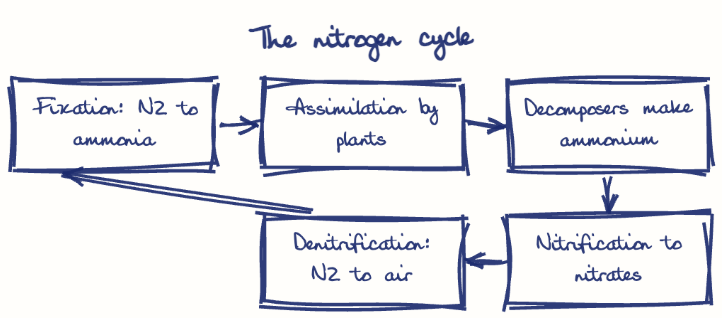
Carbon cycles between air, organisms, soil and oceans through photosynthesis, respiration, decomposition and combustion, while nitrogen is fixed by bacteria, assimilated by plants and returned to air by denitrification. In India, the Green India Mission expands forest carbon sinks, and Krishna-Godavari farmers grow pulses in rice fallows to fix nitrogen.
Model answer
Ghissu Editorial · Verified 4 Oct 2026 · 274 words
Indian Carbon Initiatives
India’s Green India Mission3 (GIM) promotes afforestation and sustainable forest management to sequester carbon, strengthening the forest sink that offsets part of India’s emissions. Additionally, mangrove ecosystems in Andhra Pradesh serve as significant carbon sinks, storing large carbon amounts and protecting coastal areas from climate impacts.
Indian Nitrogen Context
Andhra Pradesh’s delta farmers sow nitrogen-fixing pulses like black gram in rice fallows to improve soil fertility naturally. However, excessive synthetic fertilizer use causes nitrogen pollution, leading to groundwater contamination and nitrous oxide emissions. The Soil Health Card scheme helps farmers optimize nitrogen use, reducing environmental harm.
Agroforestry and Fertilizer Optimization
Promote community-led agroforestry in Andhra Pradesh to enhance carbon sequestration and soil health. Expand precision farming and the Soil Health Card scheme to reduce nitrogen fertilizer overuse and pollution.
Research and Policy Integration
Support ISRO’s remote sensing centres and universities in Andhra Pradesh to monitor carbon and nitrogen fluxes and develop sustainable management strategies. Integrate nitrogen management explicitly in Andhra Pradesh’s State Action Plan on Climate Change to complement carbon reduction efforts under NAPCC.
This model answer is indicative and the model can make mistakes; please verify key facts independently.
Practise this question
1Get the answer sheet
Sized for this question.
2Write your answer
Timed, by hand.
3Get it marked
Your score and what to fix.
This chapter in the exam
Biotechnology & Nanotechnology: scope, ethics, genetic engineering, biodiversity, fermentation, immuno-diagnosis50 questions
Asked in 8 of 8 sittings since 2008
Most tested: Biodiversity and biotechnology governance/ethics, especially conservation, GMOs, and applied public-health biotech.
- 2025Trace the evolution of India's National Biotechnology Development Strategy (NBDS) and discuss its key objectives. Critically evaluate its impact on the growth of the biotechnology sector in India.
- 2025Analyze the potential of plant-derived biopharmaceuticals in promoting sustainable healthcare. Explain how the application of green pharmacy principles can help minimize environmental harm at each stage of the pharmaceutical lifecycle.
All 50 questions, sorted by sub-topic, with model answers and practice.
Question from the official APPSC Group-I Mains 2017 paper. Answer written by Ghissu's engine and checked against our editorial standards. Found an error? Tell us and we correct it within 48 hours.