Describe the methods of gene transfer in developing Genetically Modified crops.
In short
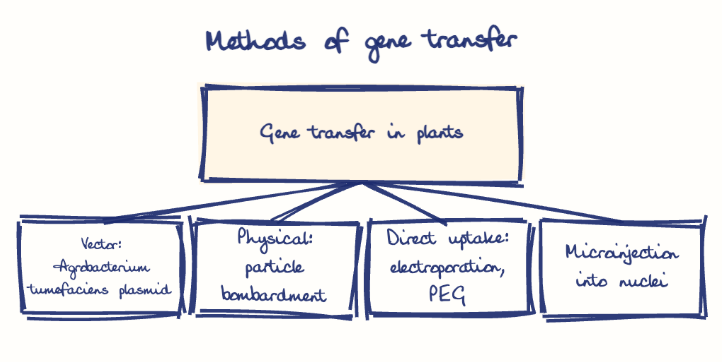
Genes are transferred into GM crops mainly by Agrobacterium-mediated transformation, which uses the bacterium's plasmid to carry the gene into plant cells, and by particle bombardment, which shoots DNA-coated particles into tissue. Electroporation, PEG-mediated uptake by protoplasts and microinjection are other methods, all overseen by GEAC and DBT biosafety rules.
Model answer
Ghissu Editorial · Verified 4 Oct 2026 · 272 words
Agrobacterium-Mediated Transformation
Exploits Agrobacterium tumefaciens to transfer plasmid-borne genes, enabling stable integration mainly in dicots and some monocots, with minimal genomic disruption.
GEAC Regulatory Oversight
The Genetic Engineering Appraisal Committee governs GM crop approvals and biosafety, with ongoing field trials ensuring compliance and environmental safety.
Department of Biotechnology Guidelines
DBT provides comprehensive protocols for recombinant DNA research and biosafety evaluation, facilitating structured gene transfer research and commercialization.
Tissue Culture Optimization
Crop-specific protocols are needed for regeneration, with Acharya N.G. Ranga Agricultural University in Andhra Pradesh providing critical tissue culture and molecular biology support tailored to regional crops.
Stable Transgene Expression
Ensuring gene stability across generations requires molecular characterization and long-term monitoring to prevent gene silencing or inactivation.
Biosafety and Socio-Economic Issues
Risks like gene flow to wild relatives and farmer acceptance are addressed through strict guidelines, continuous monitoring, and public awareness campaigns.
Collaborative Expertise and Infrastructure
Integration of molecular biology, genetic engineering, and biochemistry expertise in regional labs enhances successful gene transfer and transgenic crop development.
This model answer is indicative and the model can make mistakes; please verify key facts independently.
Practise this question
1Get the answer sheet
Sized for this question.
2Write your answer
Timed, by hand.
3Get it marked
Your score and what to fix.
This chapter in the exam
Human diseases; genetic engineering basics; biotechnology in agriculture; vaccines54 questions
Asked in 8 of 8 sittings since 2008
Most tested: Vaccines and immunisation, alongside GM crops/biotech agriculture.
- 2025Discuss the transmission dynamics of respiratory tract infections in densely populated urban settings. Propose effective public health strategies for their prevention.
- 2025Examine how urban infrastructure influences the implementation of preventive measures during microbial disease outbreaks. Suggest technology-driven solutions.
All 54 questions, sorted by sub-topic, with model answers and practice.
Question from the official APPSC Group-I Mains 2017 paper. Answer written by Ghissu's engine and checked against our editorial standards. Found an error? Tell us and we correct it within 48 hours.