Give an account on chemicals and drugs produced from animals.
In short
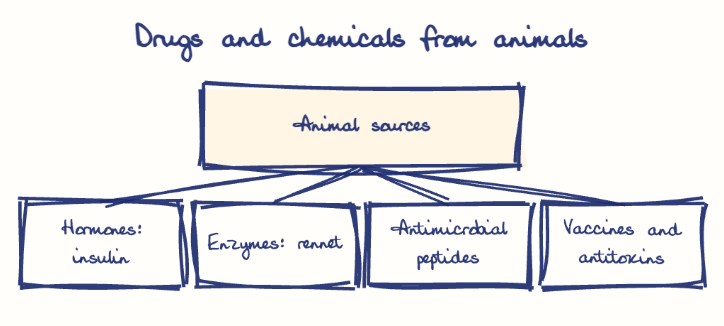
Animals yield hormones such as insulin from pig and cow pancreas, enzymes like rennet for cheese, the anticoagulant heparin from pig intestine, antimicrobial peptides and lysozyme, and antitoxins and antivenoms raised in horses. These remain indispensable for human and veterinary health, though production raises animal welfare and biodiversity concerns.
Model answer
Ghissu Editorial · Verified 4 Oct 2026 · 246 words
Hormones and enzymes
Insulin from pig and cow pancreas is essential for diabetes treatment; rennet from calf stomach supports cheese production in Andhra Pradesh’s dairy industry.
Other drugs and antimicrobials
Heparin from pig intestine prevents blood clotting and snake venom yields antivenom; animal-derived peptides provide antimicrobial effects crucial for veterinary health in Andhra Pradesh.
Medical and veterinary use
Animal-based drugs improve treatment of chronic diseases and livestock health, enhancing milk and meat production in Andhra Pradesh, which contributes significantly to agricultural GVA.
Industrial and research roles
Enzymes aid food processing; animal compounds serve as raw materials in drug development, advancing India’s pharmaceutical autonomy.
Animal welfare and biodiversity
Extraction raises ethical issues; CCSEA oversees standards but enforcement is weak in rural Andhra Pradesh. Overharvesting threatens biodiversity and risks zoonotic diseases.
Regulation and technology
Quality control is vital to prevent counterfeit drugs; drug regulators enforce standards under the Drugs and Cosmetics Act. High costs and technical barriers limit accessibility, requiring enhanced R&D.
Strengthen ethical oversight and innovation
Expand CCSEA’s reach in Andhra Pradesh and boost indigenous biotechnology to reduce import dependence.
This model answer is indicative and the model can make mistakes; please verify key facts independently.
Practise this question
1Get the answer sheet
Sized for this question.
2Write your answer
Timed, by hand.
3Get it marked
Your score and what to fix.
This chapter in the exam
Biotechnology & Nanotechnology: scope, ethics, genetic engineering, biodiversity, fermentation, immuno-diagnosis50 questions
Asked in 8 of 8 sittings since 2008
Most tested: Biodiversity and biotechnology governance/ethics, especially conservation, GMOs, and applied public-health biotech.
- 2025Trace the evolution of India's National Biotechnology Development Strategy (NBDS) and discuss its key objectives. Critically evaluate its impact on the growth of the biotechnology sector in India.
- 2025Analyze the potential of plant-derived biopharmaceuticals in promoting sustainable healthcare. Explain how the application of green pharmacy principles can help minimize environmental harm at each stage of the pharmaceutical lifecycle.
All 50 questions, sorted by sub-topic, with model answers and practice.
Question from the official APPSC Group-I Mains 2017 paper. Answer written by Ghissu's engine and checked against our editorial standards. Found an error? Tell us and we correct it within 48 hours.