Invasive alien species are the second largest threat to biodiversity after habitat destruction. Discuss the causes with examples.
In short
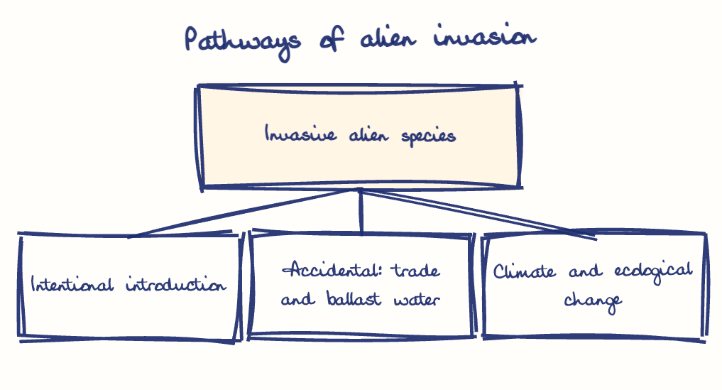
Invasive alien species spread through deliberate introductions for agriculture or ornament, accidental transport in trade and ship ballast water, and climate shifts that let them outcompete natives. Examples include water hyacinth clogging Andhra Pradesh's water bodies, the Leptocybe invasa wasp damaging eucalyptus and the giant African snail.
Model answer
Ghissu Editorial · Verified 4 Oct 2026 · 259 words
Human Activities and Trade
Intentional introductions such as the water hyacinth in Andhra Pradesh for ornamental use have led to widespread ecological disruption. Additionally, accidental transport through global trade, exemplified by the gall-forming insect Leptocybe invasa in coastal Tamil Nadu, highlights how human commerce facilitates invasive species spread.
Ecological and Climate Change Effects
Climate alterations, including changes in rainfall and temperature, create favorable conditions for invasive species like the giant African snail to colonize new habitats. This species thrives in altered environments in Andhra Pradesh, outcompeting native fauna and damaging crops, demonstrating how ecological shifts exacerbate invasions.
Water Hyacinth Impact
Introduced for ornamental purposes, water hyacinth now chokes rivers and reservoirs in Andhra Pradesh, reducing oxygen levels and threatening native aquatic life.
Monitoring and Community Engagement
Establishing early detection systems and raising public awareness in vulnerable regions such as Rayalaseema and coastal Andhra will enable timely management and foster community participation in controlling invasives.
This model answer is indicative and the model can make mistakes; please verify key facts independently.
Sources
Practise this question
1Get the answer sheet
Sized for this question.
2Write your answer
Timed, by hand.
3Get it marked
Your score and what to fix.
This chapter in the exam
Biotechnology & Nanotechnology: scope, ethics, genetic engineering, biodiversity, fermentation, immuno-diagnosis50 questions
Asked in 8 of 8 sittings since 2008
Most tested: Biodiversity and biotechnology governance/ethics, especially conservation, GMOs, and applied public-health biotech.
- 2025Trace the evolution of India's National Biotechnology Development Strategy (NBDS) and discuss its key objectives. Critically evaluate its impact on the growth of the biotechnology sector in India.
- 2025Analyze the potential of plant-derived biopharmaceuticals in promoting sustainable healthcare. Explain how the application of green pharmacy principles can help minimize environmental harm at each stage of the pharmaceutical lifecycle.
All 50 questions, sorted by sub-topic, with model answers and practice.
Question from the official APPSC Group-I Mains 2017 paper. Answer written by Ghissu's engine and checked against our editorial standards. Found an error? Tell us and we correct it within 48 hours.