What is a Biopesticide ? How are fungal parasites of insects useful in Biological control ?
In short
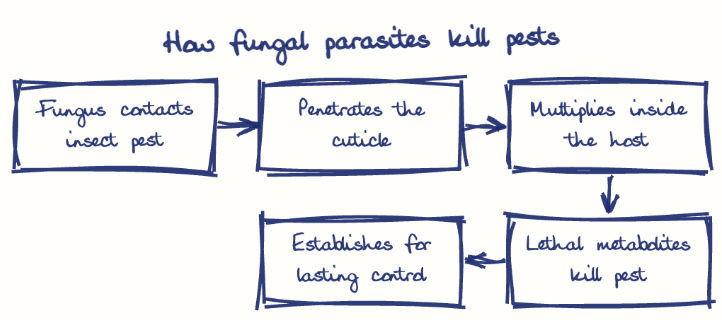
A biopesticide is a formulation derived from natural organisms such as bacteria, fungi or viruses, or their metabolites, that controls specific pests with minimal environmental harm. Entomopathogenic fungi like Beauveria bassiana and Metarhizium anisopliae penetrate insect cuticles and kill pests from within, giving lasting, residue-free control of whiteflies and aphids.
Model answer
Ghissu Editorial · Verified 4 Oct 2026 · 272 words
Biopesticide Concept
Derived from natural organisms, biopesticides like microbial pesticides (e.g., Bacillus thuringiensis) offer targeted pest control with minimal environmental impact, backed by the BioE3 Policy1 and Bio-RIDE scheme that promote innovation and commercialization.
Andhra Pradesh Context
The state integrates biopesticides in horticulture and aquaculture, reducing chemical residues and supporting biodiversity. Additionally, these practices help maintain soil health and protect beneficial insect populations crucial for crop productivity.
Advantages and Challenges
They provide long-term suppression and fit IPM programs but depend on environmental factors like humidity and temperature, and require farmer training for effective application and timing.
Ecological and Economic Benefits
Fungal parasites maintain pest populations below thresholds, reduce chemical use, lower health risks, and improve export potential, as seen in Andhra Pradesh’s chilli farming. They also contribute to ecosystem balance by preserving natural predators.
R&D and Production
Boost research under Bio-RIDE and establish local production units to promote Aatmanirbhar Bharat in sustainable inputs. Tailoring fungal strains to local agro-climatic zones will enhance efficacy.
Policy and Awareness
Implement farmer education and provide subsidies to encourage adoption within IPM frameworks. Extension services should focus on proper usage to maximize benefits and overcome challenges.
This model answer is indicative and the model can make mistakes; please verify key facts independently.
Practise this question
1Get the answer sheet
Sized for this question.
2Write your answer
Timed, by hand.
3Get it marked
Your score and what to fix.
This chapter in the exam
Human diseases; genetic engineering basics; biotechnology in agriculture; vaccines54 questions
Asked in 8 of 8 sittings since 2008
Most tested: Vaccines and immunisation, alongside GM crops/biotech agriculture.
- 2025Discuss the transmission dynamics of respiratory tract infections in densely populated urban settings. Propose effective public health strategies for their prevention.
- 2025Examine how urban infrastructure influences the implementation of preventive measures during microbial disease outbreaks. Suggest technology-driven solutions.
All 54 questions, sorted by sub-topic, with model answers and practice.
Question from the official APPSC Group-I Mains 2017 paper. Answer written by Ghissu's engine and checked against our editorial standards. Found an error? Tell us and we correct it within 48 hours.