What is Major Histocompatibility Complex (MHC) ? Describe the role of MHC classes.
In short
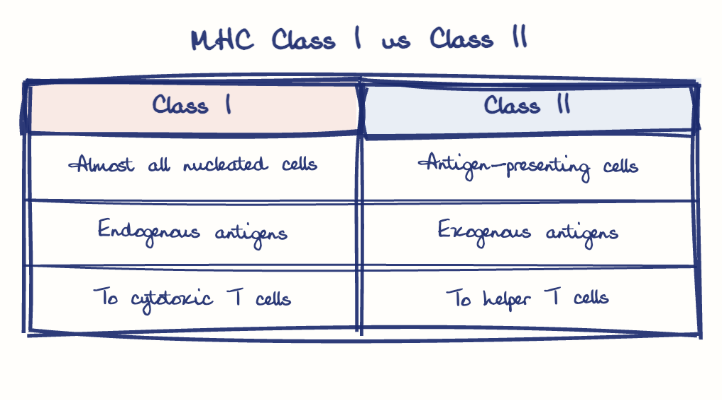
The Major Histocompatibility Complex is a highly polymorphic chromosome 6 gene cluster (HLA in humans) encoding proteins that present antigens to T cells. Class I molecules on nearly all nucleated cells show internal antigens to cytotoxic T cells, while Class II molecules show engulfed antigens to helper T cells.
Model answer
Ghissu Editorial · Verified 4 Oct 2026 · 279 words
Chromosomal Location and Polymorphism
MHC genes on chromosome 6 exhibit extraordinary polymorphism, ensuring unique immune profiles essential for transplant compatibility. This genetic diversity underpins the immune system’s ability to distinguish self from non-self.
HLA System and Institutional Role
The human MHC, HLA, includes loci A, B, C, and D encoding cell surface proteins for self/non-self recognition; Sri Venkateswara Institute of Medical Sciences in Tirupati applies HLA typing in transplants, enhancing graft survival by matching donor-recipient profiles.
Class I MHC Molecules
Expressed on almost all nucleated cells, they present endogenous antigens such as viral proteins to cytotoxic T cells, which destroy infected or abnormal cells.
Class II MHC Molecules
Found on antigen-presenting cells, they present exogenous antigens to helper T cells, activating broader immune responses including antibody production. This class is vital for coordinating adaptive immunity against extracellular pathogens.
Polymorphism and Infrastructure
High allelic diversity complicates matching, especially in Andhra Pradesh’s diverse populations; molecular HLA typing is limited in rural areas, restricting access to precise immunogenetic diagnostics.
Way Forward
Expand molecular typing labs, develop regional HLA allele databases through population studies, and integrate MHC education in medical training to improve transplant success and immunological care.
This model answer is indicative and the model can make mistakes; please verify key facts independently.
Practise this question
1Get the answer sheet
Sized for this question.
2Write your answer
Timed, by hand.
3Get it marked
Your score and what to fix.
This chapter in the exam
Biotechnology & Nanotechnology: scope, ethics, genetic engineering, biodiversity, fermentation, immuno-diagnosis50 questions
Asked in 8 of 8 sittings since 2008
Most tested: Biodiversity and biotechnology governance/ethics, especially conservation, GMOs, and applied public-health biotech.
- 2025Trace the evolution of India's National Biotechnology Development Strategy (NBDS) and discuss its key objectives. Critically evaluate its impact on the growth of the biotechnology sector in India.
- 2025Analyze the potential of plant-derived biopharmaceuticals in promoting sustainable healthcare. Explain how the application of green pharmacy principles can help minimize environmental harm at each stage of the pharmaceutical lifecycle.
All 50 questions, sorted by sub-topic, with model answers and practice.
Question from the official APPSC Group-I Mains 2017 paper. Answer written by Ghissu's engine and checked against our editorial standards. Found an error? Tell us and we correct it within 48 hours.