Write a brief note on the architecture during the period of Vijayanagar Empire.
In short
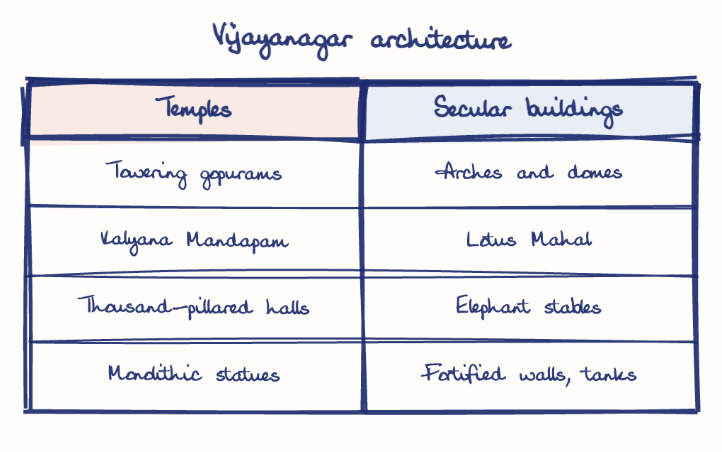
Vijayanagar architecture combined grand Dravidian temples with towering gopurams, Kalyana Mandapas and pillared halls, as at Hampi's Virupaksha and Vittala temples, with Indo-Islamic secular buildings like the Lotus Mahal. Its monoliths and planned capital marked a high point, and its imprint survives at Lepakshi and Tadipatri in Andhra Pradesh.
Model answer
Ghissu Editorial · Verified 4 Oct 2026 · 281 words
Dravidian Temple Grandeur
Temples like Virupaksha and Vittala in Hampi feature towering gopurams, expansive mandapas, and intricate carvings of deities and royal iconography.
Hybrid Architectural Influences
Vijayanagar style synthesizes Chalukyan, Chola, and Pandya traditions, exemplified by Kalyana Mandapam and 1000-pillared halls such as Vasanta Mandapa.
Secular and Indo-Islamic Elements
The Lotus Mahal and elephant stables show Indo-Islamic arches and domes, reflecting openness to diverse cultural influences.
Monolithic Sculptures and Urban Planning
Large granite statues like Lakshmi Narasimha and fortified city planning with tanks and aqueducts highlight advanced urban design.
Response to Islamic Invasions
Vijayanagar architecture symbolized Hindu resistance and political legitimacy against Deccan Sultanates.
Patronage and Social Structure
Rulers patronized Brahmins and elites; temples served religious, social, and economic roles, as at Tirumala and Srikalahasti in Andhra Pradesh.
Cultural Synthesis and Literary Flourishing
Architectural projects linked to festivals and royal ceremonies reinforced cultural identity.
Impact of Battle of Talikota (1565)
Defeat led to decline in Vijayanagar capital but influenced Nayaka architecture in Tamil Nadu and Andhra.
Cultural Legacy and Identity
Vijayanagar architecture preserves Dravidian styles and survives in Andhra Pradesh at Lepakshi and Tadipatri.
Tourism and Heritage Conservation
Hampi ruins attract global tourists, aiding heritage preservation and local economy.
Influence on Later Styles
The Vijayanagar style shaped Nayaka temple architecture with elaborate pillared halls and gopurams.
This model answer is indicative and the model can make mistakes; please verify key facts independently.
Practise this question
1Get the answer sheet
Sized for this question.
2Write your answer
Timed, by hand.
3Get it marked
Your score and what to fix.
This chapter in the exam
Andhra - Medieval16 questions
Asked in 8 of 8 sittings since 2008
Most tested: Telugu language and literature under medieval dynasties, especially Kakatiya, Qutub Shahi, Reddi, and Vijayanagara patronage.
- 2025Discuss the growth of various Saivite sects during the Kakatiya rule.
- 2025Discuss the significance of the Warangal Fort complex as a historical monument.
All 16 questions, sorted by sub-topic, with model answers and practice.
Question from the official APPSC Group-I Mains 2020 paper. Answer written by Ghissu's engine and checked against our editorial standards. Found an error? Tell us and we correct it within 48 hours.