Explain the different types of cybercrimes and the importance of cyber laws in India.
In short
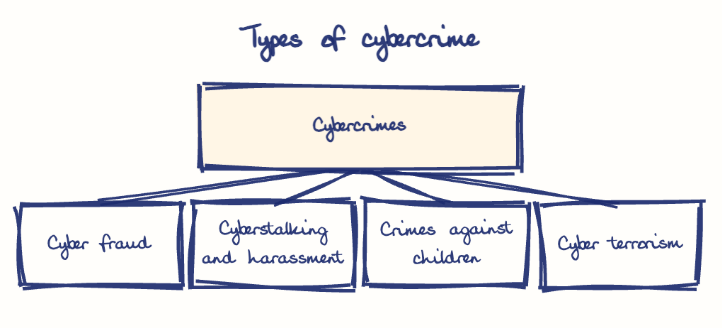
Cybercrimes include financial fraud and phishing, cyberstalking, child pornography and cyberbullying, and cyber terrorism against critical infrastructure. Cyber laws such as the IT Act, 2000 and the Digital Personal Data Protection Act, 2023, enforced through CERT-In and I4C, protect India's 969 million internet users and critical systems.
Model answer
Ghissu Editorial · Verified 4 Oct 2026 · 321 words
Information Technology Act, 2000
The foundational law defining cybercrimes and penalties, updated to address new threats.
National Cyber Security Policy, 2013
Focuses on capacity building and awareness, aiming to train 500,000 cybersecurity professionals despite manpower challenges.
Specialised Agencies
CERT-In handles incident response; I4C coordinates multi-agency efforts; the National Cyber Crime Reporting Portal allows anonymous citizen reporting.
Recent Laws
The Digital Personal Data Protection Act, 2023, and IT Rules, 2021, regulate data protection and social media content.
Cyber Fraud
Includes phishing and identity theft; over 9.42 lakh SIM cards linked to fraud have been blocked nationally, and Andhra Pradesh reports rising cases.
Cyberstalking and Harassment
CCPWC scheme combats crimes against women and children.
Child Cybercrimes
A 32% rise in offenses against children; reporting facilitated by the National Cyber Crime Reporting Portal.
Cyber Terrorism
Attacks on critical infrastructure, such as the suspected cyberattack linked to the October 2020 Mumbai power outage, threaten national security.
Underreporting
Due to low awareness and mistrust, especially in rural Andhra Pradesh.
Skill Gaps
Over 25,000 law enforcement trained, but ongoing capacity building needed.
Cross-border Issues
India’s stance on international conventions reflects sovereignty concerns; UN Cybercrime Convention adoption in 2024 offers new cooperation.
This model answer is indicative and the model can make mistakes; please verify key facts independently.
Practise this question
1Get the answer sheet
Sized for this question.
2Write your answer
Timed, by hand.
3Get it marked
Your score and what to fix.
This chapter in the exam
Basic Knowledge of Laws in India6 questions
Asked in 3 of 8 sittings since 2008
Most tested: Contemporary statutory frameworks and their practical relevance, especially cyber law and tax/labour law reforms.
- 2025What do you understand by cyberstalking? What are the various other cyber offences recognised under Information Technology Act, 2000?
- 2025What is GST? Discuss the regulatory framework of GST in India, including Constitutional provisions applicable to GST.
All 6 questions, sorted by sub-topic, with model answers and practice.
Question from the official APPSC Group-I Mains 2020 paper. Answer written by Ghissu's engine and checked against our editorial standards. Found an error? Tell us and we correct it within 48 hours.