What is e-NAM? State the challenges in its implementation.
In short
e-NAM, launched in 2016, is a pan-India electronic trading platform that links regulated mandis so farmers can sell beyond local markets with better price discovery. Though 1,656 mandis are integrated, weak assaying and storage, low digital literacy, unreformed APMC laws and offline post-auction processes hold it back.
Model answer
Ghissu Editorial · Verified 4 Oct 2026 · 254 words
Legal Reforms and State Adoption
States like Andhra Pradesh, Maharashtra, and Gujarat amended APMC laws for unified licensing, single market fee, and electronic auctions, facilitating e-NAM’s implementation. These reforms enable seamless inter-state trade and reduce transaction costs.
Digital Literacy and Regulatory Barriers
Limited awareness among farmers, especially smallholders, and states like West Bengal not amending APMC laws restrict e-NAM’s reach and inter-state trade. Additionally, post-auction inefficiencies such as delayed payments and lack of real-time support undermine trust in the platform.
Infrastructure and Capacity Building
Expanding assaying labs and cold storage, especially in Andhra Pradesh’s horticulture hubs, alongside digital literacy programs, can boost participation. Farmer Producer Organizations also play a key role in collective bargaining and direct trading.
Regulatory Harmonization and Post-Trade Automation
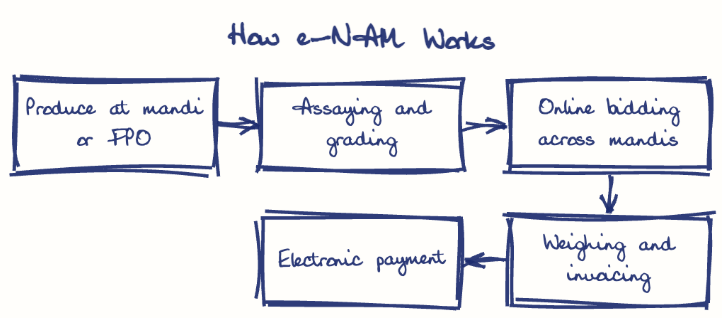
Adoption of the Model State/UT Agricultural Produce and Livestock Marketing (Promotion and Facilitation) Act, 2017, and automating payment settlements will improve transparency and efficiency. Integrating real-time weighing, invoicing, and electronic payments is essential for farmer satisfaction.
This model answer is indicative and the model can make mistakes; please verify key facts independently.
Sources
Practise this question
1Get the answer sheet
Sized for this question.
2Write your answer
Timed, by hand.
3Get it marked
Your score and what to fix.
This chapter in the exam
Agricultural Development (India)16 questions
Asked in 7 of 8 sittings since 2008
Most tested: Agricultural credit and market regulation/price policy.
- 2025Examine the significance of agriculture finance, production, and marketing in the context of India's agricultural development. Discuss the challenges and opportunities associated with financing agricultural activities, improving production, and developing efficient marketing systems to support sustainable growth in the agricultural sector.
- 2025Explain the role of the Agricultural Produce Market Committee (APMC) Act in Agricultural Price Policy in regulating the agricultural market in India. What are the issues that have been observed by policy makers regarding the functioning of the APMC Act?
All 16 questions, sorted by sub-topic, with model answers and practice.
Question from the official APPSC Group-I Mains 2020 paper. Answer written by Ghissu's engine and checked against our editorial standards. Found an error? Tell us and we correct it within 48 hours.