Is there any difference between gene therapy, transgenic organisms, and gene enhancement/genome editing? With example, explain the ethical concerns in each of these approaches? When can genome editing be considered ethical?
In short
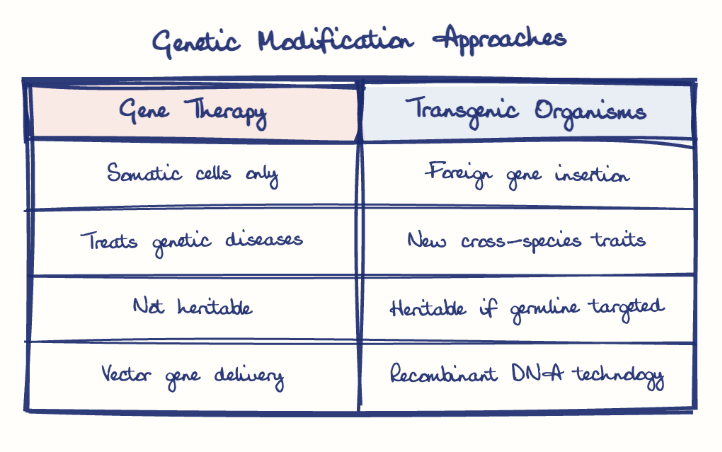
Gene therapy repairs genes in a patient's body cells, transgenics move genes across species, as in Bt cotton, and genome editing rewrites DNA precisely, each raising different ethical stakes. Genome editing is ethical when it treats serious disease or meets food needs, is proven safe, consented, equitable and transparently overseen.
Model answer
Ghissu Editorial · Verified 4 Oct 2026 · 326 words
Gene Therapy Defined
Gene therapy treats genetic diseases by correcting defective genes in somatic cells without heritable changes, using viral or non-viral vectors. The first successful case was in 1990 treating ADA deficiency. It focuses on therapeutic correction rather than enhancement.
Genome Editing and Gene Enhancement
Genome editing, exemplified by DRR Dhan 100 rice developed in India, allows precise DNA changes without necessarily introducing foreign DNA. It can target somatic or germline cells, enabling heritable changes and potential enhancement beyond therapy, distinguishing it from traditional transgenics.
Genome Editing and Ethics
Genome editing raises ethical issues like potential eugenics if applied to humans, exacerbation of social inequality through unequal access, and unknown long-term effects on genetic diversity. The possibility of “designer babies” challenges concepts of human identity and consent.
Common Ethical Themes
All approaches risk “playing God,” reduction of natural genetic diversity, genetic discrimination in insurance and employment, and worsening social inequities. These concerns are particularly sensitive in agrarian and health contexts like Andhra Pradesh.
Therapeutic Use and Safety
Ethical genome editing requires clear therapeutic goals, robust evidence of safety, and minimal off-target effects to prevent harm.
This model answer is indicative and the model can make mistakes; please verify key facts independently.
Practise this question
1Get the answer sheet
Sized for this question.
2Write your answer
Timed, by hand.
3Get it marked
Your score and what to fix.
This chapter in the exam
Biotechnology & Nanotechnology: scope, ethics, genetic engineering, biodiversity, fermentation, immuno-diagnosis50 questions
Asked in 8 of 8 sittings since 2008
Most tested: Biodiversity and biotechnology governance/ethics, especially conservation, GMOs, and applied public-health biotech.
- 2025Trace the evolution of India's National Biotechnology Development Strategy (NBDS) and discuss its key objectives. Critically evaluate its impact on the growth of the biotechnology sector in India.
- 2025Analyze the potential of plant-derived biopharmaceuticals in promoting sustainable healthcare. Explain how the application of green pharmacy principles can help minimize environmental harm at each stage of the pharmaceutical lifecycle.
All 50 questions, sorted by sub-topic, with model answers and practice.
Question from the official APPSC Group-I Mains 2020 paper. Answer written by Ghissu's engine and checked against our editorial standards. Found an error? Tell us and we correct it within 48 hours.