The 2020 Nobel Prize for Physiology and Medicine was awarded to three scientists for their work on HCV. What do you know about this virus and the disease it causes? Is there any vaccine available for this disease?
In short
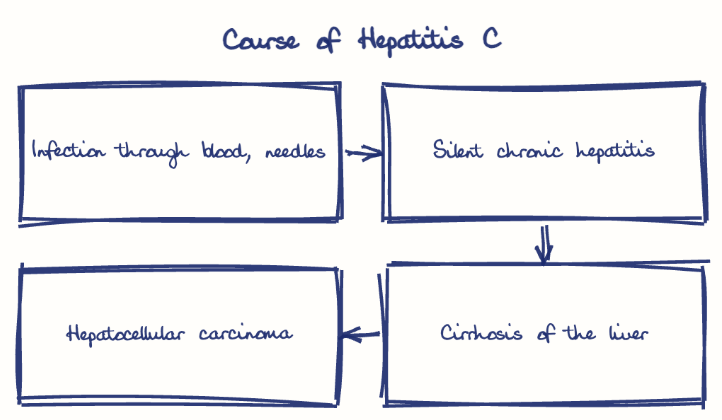
Hepatitis C virus is an enveloped, positive-sense RNA virus of the Flaviviridae family, spread mainly through blood, that causes silent chronic hepatitis progressing to cirrhosis and liver cancer. No vaccine exists, but oral direct-acting antivirals cure more than 95 percent of patients in 12 weeks.
Model answer
Ghissu Editorial · Verified 4 Oct 2026 · 261 words
National and State Coordination
ICMR leads hepatitis research nationally, with regional centres like ICMR-National Institute of Virology Pune supporting Andhra Pradesh’s surveillance, diagnostics, and epidemiological studies to monitor HCV prevalence.
Health Infrastructure Support
Schemes such as Pradhan Mantri - Ayushman Bharat Health Infrastructure Mission1 (PM-ABHIM) bolster state capacity for hepatitis diagnosis and treatment. Andhra Pradesh’s government hospitals and medical colleges provide access to direct-acting antivirals (DAAs), which have revolutionized HCV therapy with high cure rates.
Economic Barriers and No Vaccine
Despite reduced DAA costs due to generic production in India, affordability remains a challenge in rural and tribal areas. No vaccine exists for HCV, unlike hepatitis A and B, complicating prevention efforts and making safe blood transfusion and harm reduction strategies essential.
Expand Screening and Treatment
Leveraging National AIDS Control Programme2’s outreach experience and ensuring subsidized DAAs through Ayushman Bharat can enhance early diagnosis and treatment access, reducing disease burden.
This model answer is indicative and the model can make mistakes; please verify key facts independently.
Practise this question
1Get the answer sheet
Sized for this question.
2Write your answer
Timed, by hand.
3Get it marked
Your score and what to fix.
This chapter in the exam
Human diseases; genetic engineering basics; biotechnology in agriculture; vaccines54 questions
Asked in 8 of 8 sittings since 2008
Most tested: Vaccines and immunisation, alongside GM crops/biotech agriculture.
- 2025Discuss the transmission dynamics of respiratory tract infections in densely populated urban settings. Propose effective public health strategies for their prevention.
- 2025Examine how urban infrastructure influences the implementation of preventive measures during microbial disease outbreaks. Suggest technology-driven solutions.
All 54 questions, sorted by sub-topic, with model answers and practice.
Question from the official APPSC Group-I Mains 2020 paper. Answer written by Ghissu's engine and checked against our editorial standards. Found an error? Tell us and we correct it within 48 hours.