What is Covid-19 and how is it spread? How are immuno-diagnostic methods used in context of the Covid19 pandemic?
In short
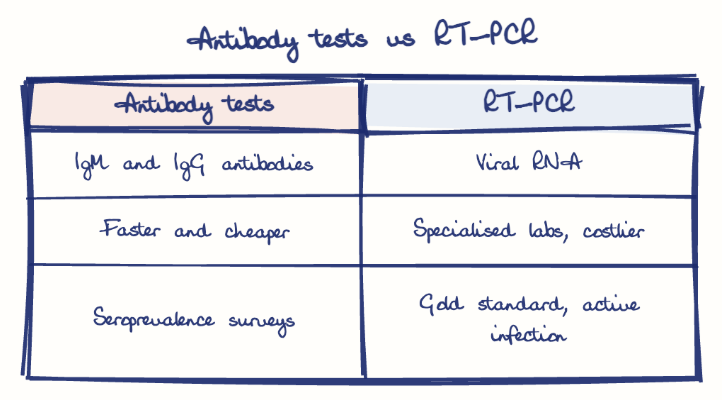
COVID-19 is the disease caused by the SARS-CoV-2 coronavirus, declared a pandemic in March 2020, which spread mainly through respiratory droplets and close contact. Immuno-diagnostic tests detecting IgM and IgG antibodies complemented RT-PCR, the gold standard for active infection, by mapping how far infection had spread.
Model answer
Ghissu Editorial · Verified 4 Oct 2026 · 233 words
Early Testing and Expansion
ICMR and NIV standardized RT-PCR testing early, enabling molecular detection of viral RNA; Andhra Pradesh medical colleges became testing hubs through AIIMS and PGIMER training, significantly scaling diagnostics3 and surveillance capacity.
Surveillance and Data Integration
The Integrated Disease Surveillance Programme (IDSP) and Integrated Health Information Platform (IHIP) provided real-time data and GIS outbreak mapping, aiding targeted responses and hotspot containment within Andhra Pradesh.
Validation and Limitations
Antibody tests are qualitative and require rigorous multi-site validation per ICMR protocols; the Foundation for Innovative New Diagnostics evaluated rapid antigen and antibody tests to ensure reliability and accuracy in diverse settings.
Infrastructure and Quality Control
Expanding laboratories under the PM-Ayushman Bharat Health Infrastructure Mission and establishing regional genomic surveillance centers in Andhra Pradesh will improve diagnostic reach and rapid response; enforcing stringent validation protocols will enhance test accuracy.
Data Integration
Linking platforms like IDSP, Aarogya Setu, and CoWIN will enhance real-time surveillance, contact tracing, and vaccine distribution, enabling informed decision-making and effective pandemic management in Andhra Pradesh.
This model answer is indicative and the model can make mistakes; please verify key facts independently.
Practise this question
1Get the answer sheet
Sized for this question.
2Write your answer
Timed, by hand.
3Get it marked
Your score and what to fix.
This chapter in the exam
Biotechnology & Nanotechnology: scope, ethics, genetic engineering, biodiversity, fermentation, immuno-diagnosis50 questions
Asked in 8 of 8 sittings since 2008
Most tested: Biodiversity and biotechnology governance/ethics, especially conservation, GMOs, and applied public-health biotech.
- 2025Trace the evolution of India's National Biotechnology Development Strategy (NBDS) and discuss its key objectives. Critically evaluate its impact on the growth of the biotechnology sector in India.
- 2025Analyze the potential of plant-derived biopharmaceuticals in promoting sustainable healthcare. Explain how the application of green pharmacy principles can help minimize environmental harm at each stage of the pharmaceutical lifecycle.
All 50 questions, sorted by sub-topic, with model answers and practice.
Question from the official APPSC Group-I Mains 2020 paper. Answer written by Ghissu's engine and checked against our editorial standards. Found an error? Tell us and we correct it within 48 hours.