What is nuclear energy? At the end of 2019, seven nuclear reactors were under construction in India, with a combined capacity of 5.4 GW. What are the advantages and disadvantages of using nuclear energy in India? What is the NPT and how does this impact India which is not a member of the NPT?
In short
Nuclear energy is power released by controlled fission in reactors, giving India reliable, low-carbon electricity, though high costs, safety risks, waste and uranium scarcity are drawbacks. India rejects the NPT as discriminatory, yet the 2008 NSG waiver opened civil nuclear trade while keeping its strategic independence.
Model answer
Ghissu Editorial · Verified 4 Oct 2026 · 322 words
Indigenous Development and Global Engagement
India’s PHWRs and Fast Breeder Reactors, including the Kalpakkam Prototype Fast Breeder Reactor where core loading began in 2024, demonstrate indigenization; despite non-membership in the NPT, India secured civil nuclear cooperation through the 2008 NSG waiver with countries like the US and Russia.
Economic and Safety Considerations
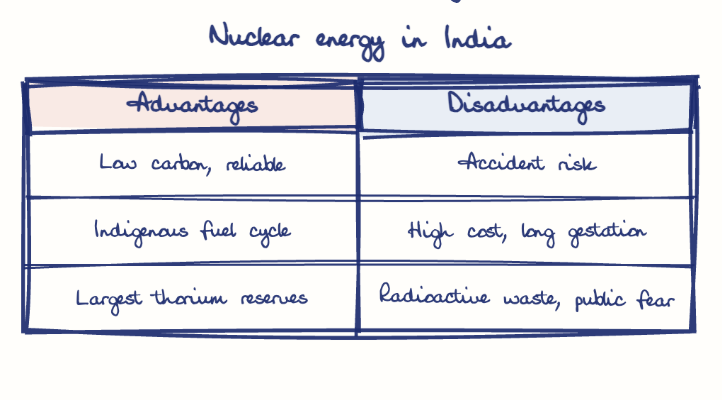
Nuclear power provides reliable, low-carbon energy vital for industrial growth in states like Andhra Pradesh but involves high capital costs, long construction times, and safety concerns, compounded by public apprehension.
Fuel Supply and Thorium Potential
India’s uranium scarcity contrasts with its vast thorium reserves, offering future prospects pending commercial thorium reactor development.
NPT Overview and India’s Stance
The NPT aims to prevent nuclear proliferation but recognizes only five nuclear states; India views it as discriminatory and maintains strategic autonomy by not signing.
Impact on Nuclear Cooperation
Non-membership caused embargoes, but the 2008 NSG waiver and bilateral deals have enabled civilian nuclear commerce while preserving India’s sovereign rights.
This model answer is indicative and the model can make mistakes; please verify key facts independently.
Practise this question
1Get the answer sheet
Sized for this question.
2Write your answer
Timed, by hand.
3Get it marked
Your score and what to fix.
This chapter in the exam
Energy: needs, resources, policy; Nuclear programme and policy24 questions
Asked in 8 of 8 sittings since 2008
Most tested: Renewable energy transition in India, especially solar/clean energy and barriers to large-scale adoption.
- 2025Differentiate between conventional and non-conventional energy resources. Explain their relevance in India's energy sector.
- 2023What is the current scenario of renewable power generation in India ? Discuss the factors responsible for the growing focus and shift towards Renewable energy.
All 24 questions, sorted by sub-topic, with model answers and practice.
Question from the official APPSC Group-I Mains 2020 paper. Answer written by Ghissu's engine and checked against our editorial standards. Found an error? Tell us and we correct it within 48 hours.