Examine the role of Alluri Sitarama Raju as the leader of Rampa Rebellion.
In short
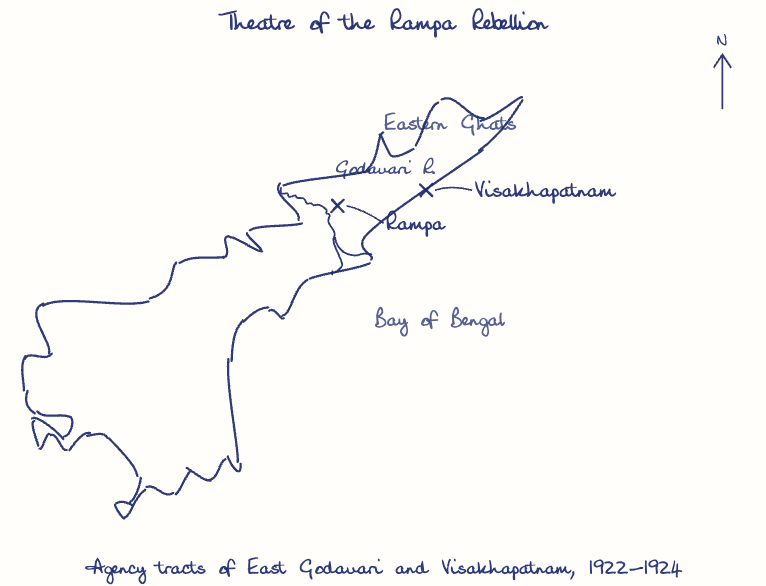
Alluri Sitarama Raju led the Rampa Rebellion (1922-1924) by turning Koya and Konda Dora grievances against forest laws into an armed guerrilla struggle, raiding police stations like Chintapalli and Krishnadevupeta for arms. Captured and shot at Koyyuru on 7 May 1924, he became an enduring folk hero of Andhra Pradesh.
Model answer
Ghissu Editorial · Verified 4 Oct 2026 · 275 words
Charismatic Tribal Leadership
Raju connected deeply with Koya and Konda Dora tribes by addressing exploitation under forest laws and officials like Tahsildar Bastian, invoking tribal beliefs and claiming healing powers, which enhanced his influence and trust among the tribals.
Catalyst for Tribal Mobilisation
Raju transformed localized tribal grievances in East Godavari into a coordinated rebellion against British forest and revenue policies, giving voice to long-ignored tribal discontent and mobilising a broad base.
Sustained Armed Resistance
Attacks on police stations like Chintapalli, Krishnadevupeta, and Annavaram ensured a continuous arms supply, forcing the British to deploy special forces such as the Malabar Police and Assam Rifles to contain the uprising.
Heightened Colonial Anxiety
The rebellion caused significant alarm in the Madras Presidency, costing the government approximately Rs 15 lakhs to suppress, reflecting the serious challenge posed by Raju’s leadership to colonial authority.
Inspiration for Tribal Nationalism
Raju became a folk hero in Andhra Pradesh, symbolizing tribal resistance and indigenous rights, influencing later regional and tribal movements that integrated these issues into the broader freedom struggle.
This model answer is indicative and the model can make mistakes; please verify key facts independently.
Sources
Practise this question
1Get the answer sheet
Sized for this question.
2Write your answer
Timed, by hand.
3Get it marked
Your score and what to fix.
This chapter in the exam
Andhra - Nationalist Movement and Formation of the State22 questions
Asked in 8 of 8 sittings since 2008
Most tested: Formation of Andhra Pradesh and the Andhra-Telangana statehood process
- 2025What were the provisions of the Gentlemen's Agreement of 1956? How far could they satisfy apprehensions of the Telangana region?
- 2025Outline the role of the students in raising major issues in the 1969 Telangana agitation.
All 22 questions, sorted by sub-topic, with model answers and practice.
Question from the official APPSC Group-I Mains 2023 paper. Answer written by Ghissu's engine and checked against our editorial standards. Found an error? Tell us and we correct it within 48 hours.