The evolution of Telugu Dalit literature has led an ideological narrative against caste discrimination, and for a just and equal society with focus on self-respect and dignity. In this connection, examine the contributions made by the Dalit Poets.
In short
Telugu Dalit poets turned Dalit experience into an autonomous literature of protest, exposing caste oppression and asserting self-respect and dignity. Kusuma Dharmanna pioneered it, Gurram Jashuva's Gabbilam (1941) and Boyi Bhimanna's Paleru became classics, and after the Karamchedu and Chundur massacres poets like Satish Chander built an assertive movement.
Model answer
Ghissu Editorial · Verified 4 Oct 2026 · 317 words
Early Dalit Literary Foundations
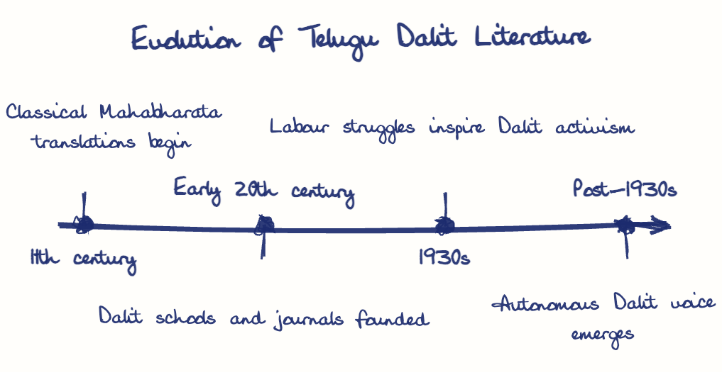
Dalit voices emerged in early 20th century Andhra Pradesh with leaders like Jala Rangaswamy and Kusuma Dharmanna founding journals such as Jaibheem and Veera-Bharathi that mobilized Dalit consciousness and highlighted social injustices.
Militant Themes and Autonomy
The 1930s agricultural labor struggles inspired Dalit poets to critique caste Hindu landlords and assert an autonomous Dalit literary space rejecting Brahmanical hegemony. This period linked caste abolition with broader freedom and labor movements, deepening the political content of Dalit literature.
Assertion of Dalit Identity
Kusuma Dharmanna and others fostered a collective identity emphasizing self-respect and resistance, rejecting co-option by mainstream nationalist projects. This assertion created a distinct Dalit cultural space that prioritized authentic representation of Dalit realities.
Cultural Mobilization
Dalit poets organized cultural programs and established hostels and vocational schools empowering Dalit youth and women in Andhra Pradesh, strengthening community solidarity and self-confidence.
Exposing Atrocities and Inspiring Political Assertion
Poets like Jala Rangaswamy documented caste atrocities, linking literary expression with democratic rights and social justice. Their works inspired Dalit participation in political movements demanding equality and dignity.
This model answer is indicative and the model can make mistakes; please verify key facts independently.
Practise this question
1Get the answer sheet
Sized for this question.
2Write your answer
Timed, by hand.
3Get it marked
Your score and what to fix.
This chapter in the exam
Andhra - Nationalist Movement and Formation of the State22 questions
Asked in 8 of 8 sittings since 2008
Most tested: Formation of Andhra Pradesh and the Andhra-Telangana statehood process
- 2025What were the provisions of the Gentlemen's Agreement of 1956? How far could they satisfy apprehensions of the Telangana region?
- 2025Outline the role of the students in raising major issues in the 1969 Telangana agitation.
All 22 questions, sorted by sub-topic, with model answers and practice.
Question from the official APPSC Group-I Mains 2023 paper. Answer written by Ghissu's engine and checked against our editorial standards. Found an error? Tell us and we correct it within 48 hours.