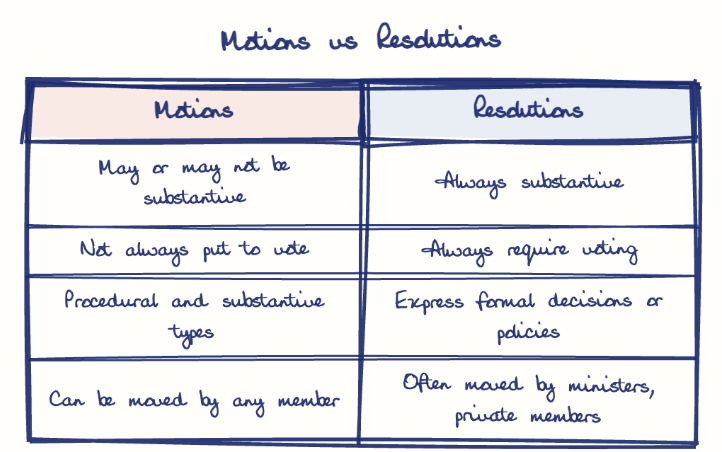
Briefly discuss the different kinds of motions used to discuss matters in the Parliament. Comment on the difference between motions and resolutions.
In short
Parliament uses substantive, substitute and subsidiary motions, such as amendments and closure, along with adjournment, privilege and no-confidence motions, to debate issues and hold the executive accountable. A resolution is a substantive motion expressing the House's opinion that always needs a formal vote, though many are not binding.
Model answer
Ghissu Editorial · Verified 4 Oct 2026 · 347 words
Varied Motions
Motions include substantive types like impeachment proposals, substitute motions offering alternatives, and subsidiary motions such as amendments and closure motions that regulate debate and legislative business flow.
Resolutions’ Role
Resolutions are always substantive, require formal voting, and express Parliament’s official decisions on policies, constitutional issues, or committee recommendations, reflecting institutional consensus.
Limited Debate Time
Despite procedural tools like closure and guillotine motions, many important bills and motions receive under two hours of discussion, as seen in the fall in committee referral of bills from 71% in the 15th Lok Sabha to 25% in the 16th. This limits thorough scrutiny, affecting issues relevant to Andhra Pradesh such as the Polavaram project.
Political Dynamics
Motions like no-confidence and adjournment are often used for political point-scoring rather than genuine accountability, reducing substantive debate and legislative effectiveness.
Procedural Clarity and Debate Time
Clearer guidelines distinguishing motions and resolutions, along with allocating more time for key motions and resolutions, especially those impacting states’ interests, can improve legislative scrutiny and democratic outcomes.
Linking Resolutions to Action
Establishing follow-up committees or monitoring bodies is necessary so that resolutions and assurances, such as the 2014 assurance of special category status for Andhra Pradesh, translate into effective implementation.
This model answer is indicative and the model can make mistakes; please verify key facts independently.
Practise this question
1Get the answer sheet
Sized for this question.
2Write your answer
Timed, by hand.
3Get it marked
Your score and what to fix.
This chapter in the exam
Parliament and State Legislatures13 questions
Asked in 8 of 8 sittings since 2008
Most tested: Comparative powers and status of the two Houses, especially Rajya Sabha vs Lok Sabha and Legislative Council vs Legislative Assembly.
- 2025In what aspects is the Legislative Council (Vidhan Parishad) different from the Rajya Sabha, considering its role at the state level?
- 2025What are the steps followed by the Indian Parliament in transforming a Bill into an Act?
All 13 questions, sorted by sub-topic, with model answers and practice.
Question from the official APPSC Group-I Mains 2023 paper. Answer written by Ghissu's engine and checked against our editorial standards. Found an error? Tell us and we correct it within 48 hours.