Define Substantive Law and Procedural Law. Discuss the interrelationship and differences between Substantive Law and Procedural Law.
In short
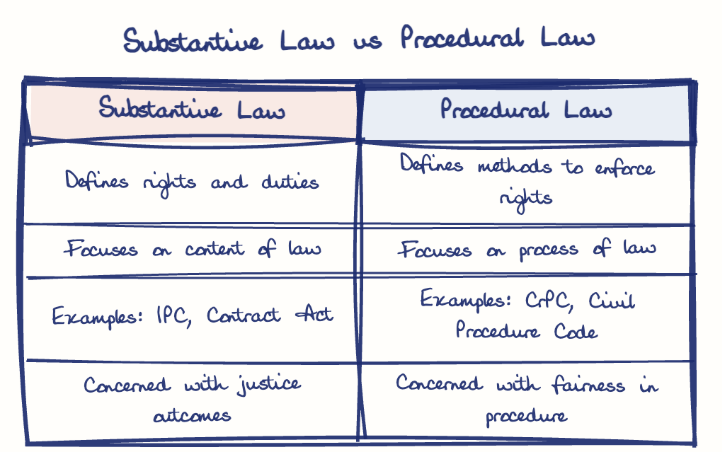
Substantive law defines rights, duties and offences, like the Indian Penal Code, while procedural law, like the Criminal Procedure Code, sets out how they are enforced. Each needs the other, yet substantive law says what the law is and procedural law how it is applied.
Model answer
Ghissu Editorial · Verified 4 Oct 2026 · 321 words
Substantive Law’s Role
It sets legal rights and duties, grounded in constitutional guarantees and the Basic Structure Doctrine3, with examples like the Indian Penal Code and the Andhra Pradesh Land Grabbing (Prohibition) Act protecting property rights.
Procedural Law’s Function
It prescribes enforcement mechanisms, including the Criminal Procedure Code and the Andhra Pradesh Lok Adalat system, ensuring fairness as emphasized in Maneka Gandhi vs. Union of India (1978) and judicial mandates for written grounds for arrest.
Ensuring Fairness and Efficiency
Procedural law also incorporates principles of natural justice and regulates court procedures, evidence, and appeals, addressing judicial delays and promoting transparency, as seen in procedural reforms like the introduction of e-courts in Andhra Pradesh.
Mutual Dependence
Substantive law defines rights; procedural law enforces them, preventing misuse through due process safeguards like Article 136 and state-level enforcement by pollution control boards in Andhra Pradesh.
Distinct Yet Complementary
Substantive law focuses on legal content; procedural law on processes, with reforms such as e-courts improving judicial efficiency and accountability.
Legal Consequences and Scope
Violation of substantive law leads to penalties or remedies, while procedural law violations may cause dismissal or retrials, highlighting their different scopes in shaping justice outcomes and fairness in procedure.
This model answer is indicative and the model can make mistakes; please verify key facts independently.
Practise this question
1Get the answer sheet
Sized for this question.
2Write your answer
Timed, by hand.
3Get it marked
Your score and what to fix.
This chapter in the exam
Basic Knowledge of Laws in India6 questions
Asked in 3 of 8 sittings since 2008
Most tested: Contemporary statutory frameworks and their practical relevance, especially cyber law and tax/labour law reforms.
- 2025What do you understand by cyberstalking? What are the various other cyber offences recognised under Information Technology Act, 2000?
- 2025What is GST? Discuss the regulatory framework of GST in India, including Constitutional provisions applicable to GST.
All 6 questions, sorted by sub-topic, with model answers and practice.
Question from the official APPSC Group-I Mains 2023 paper. Answer written by Ghissu's engine and checked against our editorial standards. Found an error? Tell us and we correct it within 48 hours.