"The making of the Right to Information Act, 2005 in India has been largely attributed to the success of civil society movement." Comment.
In short
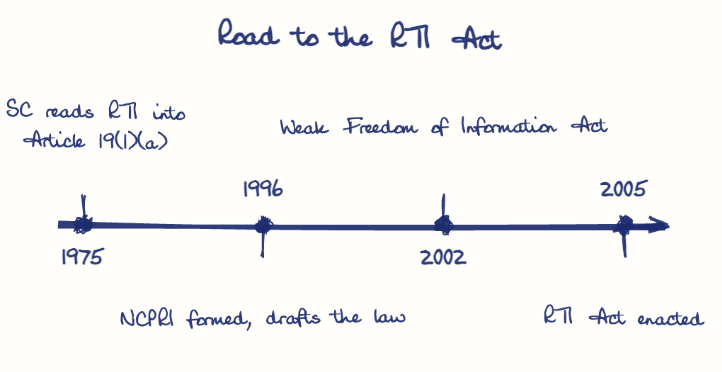
The statement is largely valid: civil society, through the MKSS and the NCPRI (1996), was the primary catalyst turning the right to information into a people's law. Yet the Supreme Court's 1975 reading of Article 19(1)(a), political endorsement and global transparency trends also shaped the RTI Act, 2005.
Model answer
Ghissu Editorial · Verified 4 Oct 2026 · 265 words
Legal and Political Evolution
The Supreme Court’s 1975 ruling linked information to Article 19(1)(a); the Freedom of Information Act, 2002, was inadequate, prompting the stronger RTI Act with mandated Central and State Information Commissions.
Grassroots Leadership
MKSS’s slogan “Hamara Paisa, Hamara Hisab” in Rajasthan mobilized citizens, while NCPRI (1996) drafted the RTI law and lobbied Parliament, ensuring citizen-centric legislation.
Cultural Tools and Ethical Governance
The movement used public hearings (Jan Sunwaii) to expose corruption, embedding transparency as a pillar of accountable governance1.
Primary Driver
Civil society transformed RTI from a legal right into a mass democratic demand, compelling government action.
Complementary Factors
Political will, judicial interpretations, and international norms also influenced the Act’s enactment.
Challenges Persist
Bureaucratic resistance and low awareness limit full potential, requiring ongoing civil society vigilance.
Awareness and Capacity Building
Enhance public education and strengthen Information Commissions to improve responsiveness.
Proactive Disclosure
Mandate publication of key data to reduce RTI requests and boost transparency.
This model answer is indicative and the model can make mistakes; please verify key facts independently.
Practise this question
1Get the answer sheet
Sized for this question.
2Write your answer
Timed, by hand.
3Get it marked
Your score and what to fix.
This chapter in the exam
Development processes: civil society and NGOs7 questions
Asked in 3 of 8 sittings since 2008
Most tested: Role of NGOs/civil society in democracy and social justice
- 2025What do you understand by civil society in the Indian context? Discuss its key features and the limitations it faces in a democratic system.
- 2025In what ways can the role of NGOs be enhanced in promoting women's empowerment and welfare in India? Discuss, with a focus on the key challenges they encounter.
All 7 questions, sorted by sub-topic, with model answers and practice.
Question from the official APPSC Group-I Mains 2023 paper. Answer written by Ghissu's engine and checked against our editorial standards. Found an error? Tell us and we correct it within 48 hours.