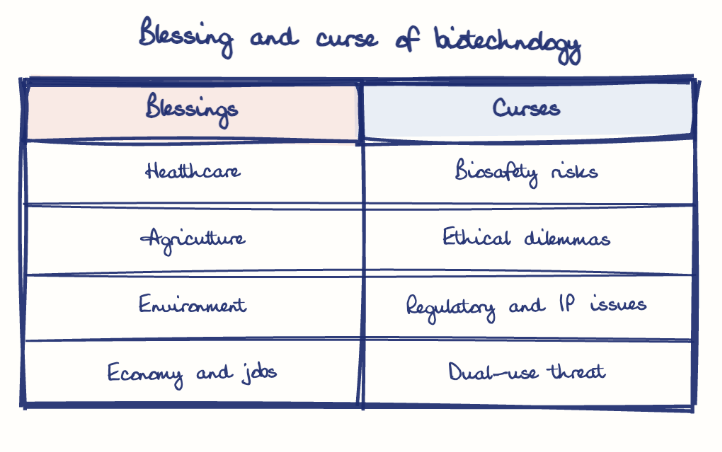
Biotechnology has unlocked a vast potential for improving human life, but the risks it poses are now a concern — Discuss throwing light on blessing and curse of Biotechnology.
In short
Biotechnology is a blessing for vaccines, diagnostics, high-yield crops and pollution control, with India producing 60% of global vaccines and Bt cotton covering 95% of its cotton area. It turns into a curse through GMO biosafety risks, ethical disputes over gene editing, regulatory delays and biowarfare misuse.
Model answer
Ghissu Editorial · Verified 4 Oct 2026 · 267 words
Healthcare Innovations
India produces 60% of global vaccines, with the Serum Institute playing a pivotal role during the COVID-19 pandemic. Advances in personalized medicine and diagnostics have significantly improved disease management and public health outcomes.
Agricultural Resilience
Bt cotton covers 95% of India’s cotton area, boosting yields and farmer incomes. ICAR and partner institutes have developed drought-tolerant SAATVIK chickpea and genome-edited rice varieties, enhancing climate resilience and food security.
Environmental and Ethical Concerns
GMOs may cause pesticide resistance, harm non-target species, and reduce biodiversity. Ethical debates on technologies like CRISPR, including fears of “playing God,” fuel public resistance and complicate policymaking in diverse societies.
Risk-Benefit Analysis
Evaluating biotech products against existing alternatives, such as Bt crops versus chemical pesticides, supports informed decisions balancing productivity and environmental risks.
Public Engagement and Governance
Transparent communication and education reduce misinformation and ethical concerns. Establishing a unified Biotechnology Authority and strengthening innovation ecosystems, especially in biotech hubs2 like Andhra Pradesh, can accelerate safe and inclusive growth.
Strengthen Biosecurity
Implementing robust biosafety protocols and fostering international cooperation are essential to prevent misuse of biotechnology for biowarfare or harmful purposes.
This model answer is indicative and the model can make mistakes; please verify key facts independently.
Practise this question
1Get the answer sheet
Sized for this question.
2Write your answer
Timed, by hand.
3Get it marked
Your score and what to fix.
This chapter in the exam
Biotechnology & Nanotechnology: scope, ethics, genetic engineering, biodiversity, fermentation, immuno-diagnosis50 questions
Asked in 8 of 8 sittings since 2008
Most tested: Biodiversity and biotechnology governance/ethics, especially conservation, GMOs, and applied public-health biotech.
- 2025Trace the evolution of India's National Biotechnology Development Strategy (NBDS) and discuss its key objectives. Critically evaluate its impact on the growth of the biotechnology sector in India.
- 2025Analyze the potential of plant-derived biopharmaceuticals in promoting sustainable healthcare. Explain how the application of green pharmacy principles can help minimize environmental harm at each stage of the pharmaceutical lifecycle.
All 50 questions, sorted by sub-topic, with model answers and practice.
Question from the official APPSC Group-I Mains 2023 paper. Answer written by Ghissu's engine and checked against our editorial standards. Found an error? Tell us and we correct it within 48 hours.