Why is Ecotourism considered as a tool for conservation of Natural heritage ? Discuss challenges associated with Ecotourism.
In short
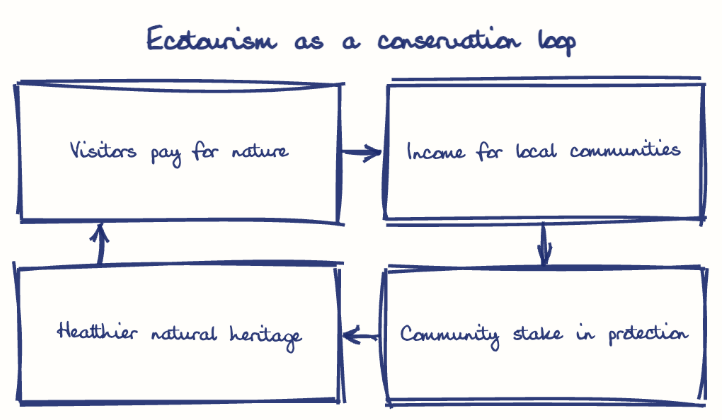
Ecotourism conserves natural heritage by linking responsible travel to habitat protection and local livelihoods, giving communities a stake in managing resources. Its challenges include habitat disturbance and pollution from over-visitation, weak infrastructure at remote sites in Andhra Pradesh, and commodification of indigenous cultures.
Model answer
Ghissu Editorial · Verified 4 Oct 2026 · 277 words
Policy Integration for Conservation
Collaboration between forest and tourism departments supports protected areas such as Coringa Wildlife Sanctuary, ensuring environmental regulations and sustainable tourism guidelines are enforced.
Community Participation
Empowering tribal and rural populations through initiatives aligned with the Mani Shankar Aiyar Committee (2012) fosters holistic empowerment and resource management. Additionally, capacity-building programs by government and NGOs enhance local skills in conservation and hospitality, promoting stewardship of natural heritage.
Environmental Degradation Risks
Unregulated ecotourism leads to habitat disturbance and pollution, as seen in over-visited sites where waste and infrastructure pressures harm fragile ecosystems.
Cultural Sensitivity and Social Impact
Ecotourism must respect indigenous traditions to prevent social alienation and loss of cultural heritage. Failure to do so risks commodification of culture, undermining the identity of natural landscapes and local communities.
Strengthen Community Governance
Greater local decision-making and revenue-sharing ensure conservation-aligned benefits, empowering communities to manage resources sustainably.
Develop Sustainable Infrastructure
Eco-friendly facilities and improved connectivity reduce environmental footprints and enhance visitor experience. Implementing robust environmental monitoring using technology can further prevent ecological degradation.
This model answer is indicative and the model can make mistakes; please verify key facts independently.
Practise this question
1Get the answer sheet
Sized for this question.
2Write your answer
Timed, by hand.
3Get it marked
Your score and what to fix.
This chapter in the exam
Biotechnology & Nanotechnology: scope, ethics, genetic engineering, biodiversity, fermentation, immuno-diagnosis50 questions
Asked in 8 of 8 sittings since 2008
Most tested: Biodiversity and biotechnology governance/ethics, especially conservation, GMOs, and applied public-health biotech.
- 2025Trace the evolution of India's National Biotechnology Development Strategy (NBDS) and discuss its key objectives. Critically evaluate its impact on the growth of the biotechnology sector in India.
- 2025Analyze the potential of plant-derived biopharmaceuticals in promoting sustainable healthcare. Explain how the application of green pharmacy principles can help minimize environmental harm at each stage of the pharmaceutical lifecycle.
All 50 questions, sorted by sub-topic, with model answers and practice.
Question from the official APPSC Group-I Mains 2023 paper. Answer written by Ghissu's engine and checked against our editorial standards. Found an error? Tell us and we correct it within 48 hours.