In what ways can the implementation of a code of ethics in public administration help in resolving conflicts of interest and promoting ethical decision-making?
In short
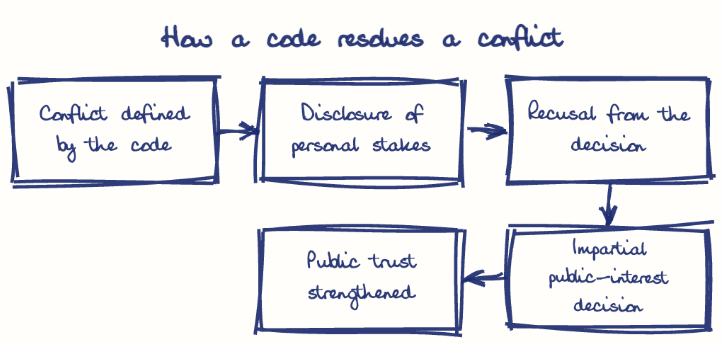
A code of ethics resolves conflicts of interest by defining them, mandating disclosure and requiring recusal, and guides decisions through values like the Nolan Committee's Seven Principles of Public Life. Since no code covers every case, it needs ethics training, ethics officers and whistleblower protection to work.
Model answer
Ghissu Editorial · Verified 4 Oct 2026 · 247 words
Defining Conflicts Clearly
The Second Administrative Reforms Commission (2007) stresses that a code helps officials recognize when personal interests conflict with public duties, preventing misuse of power.
Ensuring Transparency and Accountability
Disclosure requirements in projects like Polavaram in Andhra Pradesh reduce corruption by making conflicts visible. This transparency curbs favoritism and promotes fair resource allocation.
Embedding Foundational Values
The Nolan Committee Report’s Seven Principles of Public Life guide officials toward integrity, fairness, and responsibility, shaping ethical conduct in public service.
Building Public Trust
The Right to Information Act, 2005, alongside ethical codes, enhances citizen engagement and institutional integrity in Andhra Pradesh. This combination fosters accountability and responsiveness.
Training and Institutional Support
Regular ethics training tailored to local challenges and establishing ethics officers can deepen understanding and monitor adherence effectively.
Strengthening Accountability
Robust mechanisms for reporting violations, protecting whistleblowers, and ensuring timely redressal are essential to uphold ethical standards.
This model answer is indicative and the model can make mistakes; please verify key facts independently.
Practise this question
1Get the answer sheet
Sized for this question.
2Write your answer
Timed, by hand.
3Get it marked
Your score and what to fix.
This chapter in the exam
Public Service ethics, codes, corruption and Lokpal8 questions
Asked in 3 of 8 sittings since 2008
Most tested: Ethical leadership, integrity and accountability in public service governance.
- 2025Discuss the significance of integrity, transparency and accountability in leadership. How can public leaders demonstrate these values in their decision-making process?
- 2025Whistleblowers are guardians of ethical accountability in governance. Discuss the ethical and institutional importance of whistleblower protection in ensuring integrity in public service.
All 8 questions, sorted by sub-topic, with model answers and practice.
Question from the official APPSC Group-I Mains 2025 paper. Answer written by Ghissu's engine and checked against our editorial standards. Found an error? Tell us and we correct it within 48 hours.