Evaluate the impact of Internet of Things (IoT) technologies on the automation of household systems. Illustrate how everyday tasks have evolved due to IoT innovations.
In short
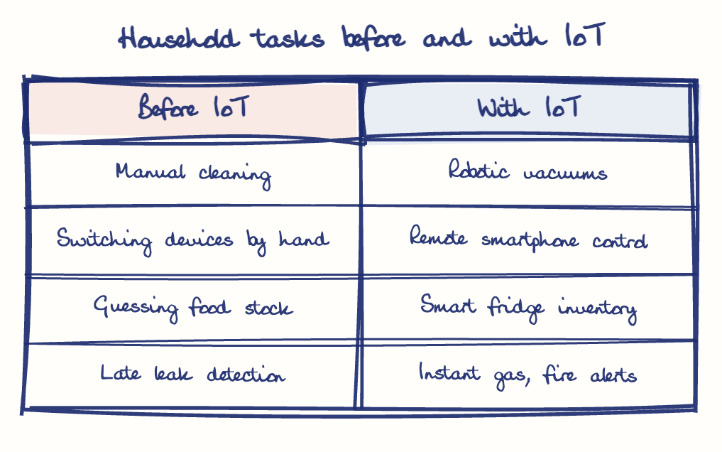
IoT has automated household systems by letting smart thermostats, lights, cameras, meters and appliances be controlled remotely, saving energy and improving safety through real-time alerts. Cleaning, cooking and health monitoring are now handled by robotic cleaners, smart kitchens and wearables, though security, privacy and access gaps persist.
Model answer
Ghissu Editorial · Verified 4 Oct 2026 · 292 words
Remote Control of Smart Devices
IoT appliances like smart thermostats and security cameras allow remote management, reducing manual effort in Visakhapatnam homes.
Voice-Enabled Accessibility
Integration with voice assistants facilitates hands-free control of household devices, enhancing usability for elderly and differently-abled family members in Andhra Pradesh.
Security Vulnerabilities
Many IoT devices lack strong security, risking hacking and data breaches, a concern for users in Andhra Pradesh.
Digital Divide
Limited internet access and affordability restrict IoT benefits for rural and weaker sections in Andhra Pradesh.
Automated Cleaning and Smart Kitchens
Robotic vacuum cleaners and IoT-enabled kitchen appliances streamline chores and reduce food waste in urban homes.
Real-Time Safety Alerts
IoT sensors detect hazards like gas leaks or fire, sending instant alerts to homeowners, improving domestic safety.
Strengthen Cybersecurity
Enforce security standards and raise awareness in Andhra Pradesh.
Expand Digital Infrastructure
Improve internet access to bridge the digital divide.
Promote Digital Literacy
Train all age groups for safe IoT use.
Support Indigenous Innovation
Encourage local startups to develop affordable, secure IoT solutions tailored to regional needs.
This model answer is indicative and the model can make mistakes; please verify key facts independently.
Practise this question
1Get the answer sheet
Sized for this question.
2Write your answer
Timed, by hand.
3Get it marked
Your score and what to fix.
This chapter in the exam
Science, Technology & Innovation: policies, institutions, achievements20 questions
Asked in 7 of 8 sittings since 2008
Most tested: Science and technology policy and mission-mode institutions
- 2025Which are the major scientific institutes located in Andhra Pradesh? Discuss the role of IISER Tirupati in the scientific and educational development of the state.
- 2025Describe the research focus of the National Institute for Research on Commercial Agriculture (NIRCA) in Rajamahendravaram. How does it support India's agricultural sector?
All 20 questions, sorted by sub-topic, with model answers and practice.
Question from the official APPSC Group-I Mains 2025 paper. Answer written by Ghissu's engine and checked against our editorial standards. Found an error? Tell us and we correct it within 48 hours.