Discuss the scope and nature of the Freedom of Speech and Expression in India. Explain the emerging dimensions of the freedom.
In short
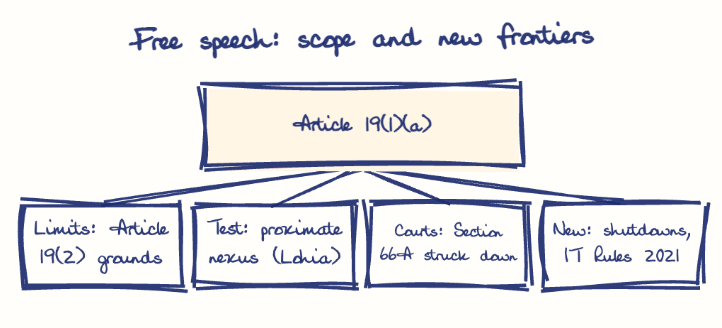
Article 19(1)(a) guarantees broad freedom of speech and expression, including press freedom and the right to know, subject to reasonable restrictions under Article 19(2) read narrowly by courts, as when Shreya Singhal (2015) struck down Section 66A. Emerging dimensions include online speech, internet shutdowns and the IT Rules 2021.
Model answer
Ghissu Editorial · Verified 4 Oct 2026 · 279 words
Judicial Guardianship
Landmark rulings like Shreya Singhal (2015) struck down vague laws such as Section 66A IT Act, while IPC Section 295A balances religious sentiments; and State of U.P. v. Raj Narain (1975) linked the citizen’s right to know with freedom of speech, the basis of the RTI regime, reinforcing participatory democracy.
Digital Expression and Censorship
Over 300 internet shutdowns (2018-2023) and IT Rules, 2021 impose restrictions on digital speech, raising privacy and expression concerns. These measures have sparked debates on balancing regulation with digital rights.
Societal Diversity and Hate Speech
The Karnataka Hate Speech Bill2 debates illustrate tensions between protecting free speech and regulating hate speech in India’s plural society. Police actions against online hate speech targeting minorities highlight the challenge of maintaining communal harmony without stifling expression.
Strengthening Institutions
Calls for autonomous media regulators and judicial mechanisms aim to protect democratic discourse from executive overreach, addressing concerns raised by the Ministry of Information and Broadcasting’s current regulatory framework.
This model answer is indicative and the model can make mistakes; please verify key facts independently.
Practise this question
1Get the answer sheet
Sized for this question.
2Write your answer
Timed, by hand.
3Get it marked
Your score and what to fix.
This chapter in the exam
Fundamental Rights, Directive Principles and Fundamental Duties5 questions
Asked in 2 of 2 sittings since 2016
Most tested: Interplay of rights, especially classification of constitutional entitlements and the FR–DPSP boundary.
- 2024Explain the significance of Fundamental Duties and how they are essential for the progress of the nation.
- 2016Discuss if the right to vote is a statutory, constitutional or fundamental right.
All 5 questions, sorted by sub-topic, with model answers and practice.
Question from the official TGPSC Group-I Mains 2016 paper. Answer written by Ghissu's engine and checked against our editorial standards. Found an error? Tell us and we correct it within 48 hours.