Define genetic engineering. Discuss the debates on genetically modified food.
In short
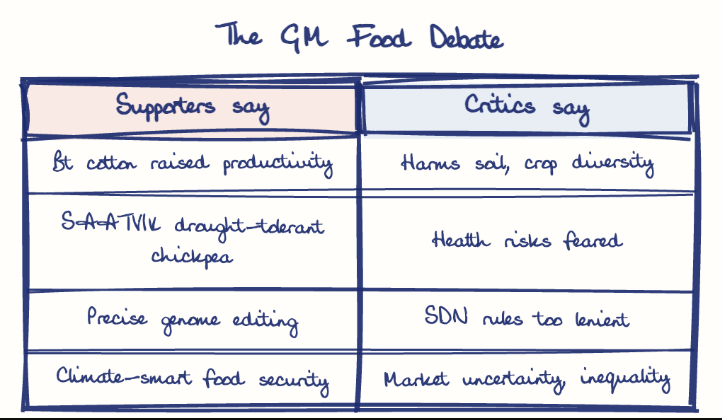
Genetic engineering is the direct manipulation of an organism's DNA to introduce or modify traits. GM food debates set higher yields and climate resilience against fears over health, biodiversity and corporate seed control, as with Bt cotton, and India regulates GMOs under the Environment Protection Act, 1986 and 1989 Rules.
Model answer
Ghissu Editorial · Verified 4 Oct 2026 · 262 words
Legal Backbone
India’s Environment Protection Act, 1986, and 1989 Rules regulate GMOs, with the Genetic Engineering Appraisal Committee (GEAC) and Institutional Biosafety Committees ensuring biosafety.
Genome Editing Guidelines
New policies for SDN-1 and SDN-2 genome-edited plants face criticism for leniency, highlighting regulatory challenges.
Ethical Oversight
National and international frameworks stress transparency and equity to prevent misuse like eugenics or bioterrorism.
Public and Environmental Concerns
GM foods raise fears of health risks, biodiversity loss, and socio-economic inequalities; Bt cotton debates illustrate productivity vs. environmental trade-offs.
Farmer Impact and Market Dynamics
Rythu Bandhu scheme aids Telangana farmers, but GM adoption is cautious amid regulatory delays; genome-edited chickpea SAATVIK approved by Central Sub-committee on Crop Standards1 shows climate-smart progress.
Precaution and Inclusion
Calls for moratoriums on risky uses and inclusive stakeholder engagement to ensure equity.
Long-term Monitoring
Continuous research by institutions such as CDFD, Hyderabad and global collaboration can harmonise standards and track ecological effects.
Strengthen Oversight
Enhance GEAC and IBSC transparency and public involvement.
Promote Sustainable Innovation
Focus on climate-resilient crops and social equity.
Expand Awareness
Educate public to build informed consent.
Global Collaboration
Align policies with international ethical standards.
This model answer is indicative and the model can make mistakes; please verify key facts independently.
Practise this question
1Get the answer sheet
Sized for this question.
2Write your answer
Timed, by hand.
3Get it marked
Your score and what to fix.
This chapter in the exam
Biotechnology, genetic engineering, stem cells6 questions
Asked in 2 of 2 sittings since 2016
Most tested: Applied biotechnology in human health and agriculture, especially genetic engineering/biotech applications.
- 2024Genetic engineering has led to break through in various research areas in solving health issues. Highlight importance of genetic engineering in stem cell manipulation towards its application in regenerative medicine.
- 2024Conversion of crop residues to bio-fuel is a potential method to reduce air pollution. Discuss.
All 6 questions, sorted by sub-topic, with model answers and practice.
Question from the official TGPSC Group-I Mains 2016 paper. Answer written by Ghissu's engine and checked against our editorial standards. Found an error? Tell us and we correct it within 48 hours.