What is fermentation? Describe the process of industrial fermentation and explain its social and economic relevance.
In short
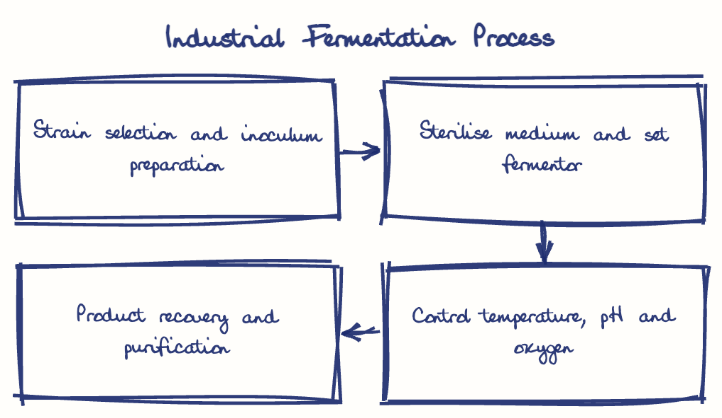
Fermentation is a metabolic process in which microbes like yeast or bacteria convert sugars into products such as ethanol, lactic acid and carbon dioxide. Industrially, selected strains grow in controlled bioreactors before downstream purification, yielding antibiotics, enzymes, biofuels and foods that support nutrition, jobs, exports and a circular economy.
Model answer
Ghissu Editorial · Verified 4 Oct 2026 · 303 words
Microbial Conversion
Yeast and bacteria use enzymes like zymase and lactate dehydrogenase to transform carbohydrates into ethanol, lactic acid, and CO2, enhancing food safety and digestibility.
Health and Environmental Impact
Fermented foods improve gut microbiota and nutrient bioavailability while reducing spoilage with minimal energy input, aligning with sustainable development goals.
Controlled Cultivation
High-yield microbial strains are selected and grown in sterile fermentors with regulated temperature, pH, and oxygen to optimize product yield.
Process Optimization
Continuous or batch fermentation methods ensure consistent quality and efficiency, critical for industrial-scale production.
Food Security and Livelihoods
It reduces post-harvest losses and supports women-led small enterprises, fostering social inclusion.
Cultural Preservation
Fermentation sustains traditional food practices, strengthening community resilience and identity.
Industrial Growth
Fermentation underpins pharmaceuticals and biofuels, generating employment and supporting Telangana’s biotech industry.
Innovation and Exports
It drives microbial biotechnology innovation, aligns with the PLI scheme, and enhances export potential.
Sustainability and Circular Economy
Fermentation uses agro-waste and renewable biomass, reducing fossil fuel dependence and promoting green industrialization.
This model answer is indicative and the model can make mistakes; please verify key facts independently.
Practise this question
1Get the answer sheet
Sized for this question.
2Write your answer
Timed, by hand.
3Get it marked
Your score and what to fix.
This chapter in the exam
Food technology, food safety, organic farming, safe drinking water2 questions
Asked in 2 of 2 sittings since 2016
Most tested: Organic/sustainable farming as a route to food security.
Question from the official TGPSC Group-I Mains 2016 paper. Answer written by Ghissu's engine and checked against our editorial standards. Found an error? Tell us and we correct it within 48 hours.