Analyse the way in which the social and cultural life of the people evolved under Satavahanas and Ikshvakus.
In short
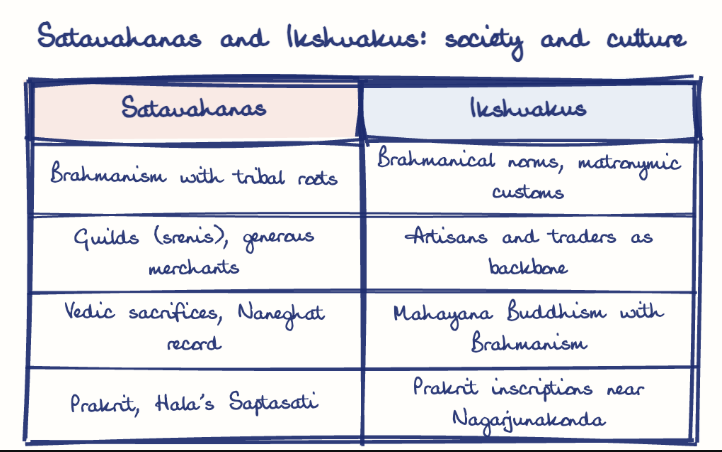
Under the Satavahanas and Ikshvakus, Deccan society became more structured yet plural, with guilds, merchants and influential royal women, while culture blended Vedic sacrifice with Buddhist patronage. Hala's Saptasati, the Karle chaitya, the Amaravati stupa and Ikshvaku queen Chamtisiri's grants at Nagarjunakonda mark this heritage of Andhra Pradesh and Telangana.
Model answer
Ghissu Editorial · Verified 4 Oct 2026 · 255 words
Tribal-Brahmanical fusion
Satavahanas integrated local tribes with Brahmanism, enforcing caste rules as per M.N. Srinivas’s Sanskritization; Gautamiputra Satakarni prevented caste intermixture but assimilated Sakas via marriage. This fusion created a mixed caste society, balancing social stability with emerging caste rigidity.
Feudatory origins and legitimacy
Ikshvakus, ruling from Vijayapuri, claimed descent from the Ikshvaku solar dynasty, enhancing royal status and linking themselves to Lord Rama. This lineage bolstered their political legitimacy and social prestige in the Krishna-Guntur region.
Religious pluralism
They patronized Mahayana Buddhism and Brahmanism, with inscriptions at Nagarjuna Konda evidencing religious coexistence and pluralism. This patronage supported Buddhist monasteries and Brahmanical institutions, fostering a culturally diverse society.
Language and art
Prakrit literature, exemplified by Hala’s Saptasati, flourished initially, followed by Sanskrit’s rise under rulers like Kuntala Satakarni. Rock-cut architecture, including chaityas and viharas, and sculptural art developed significantly, marking a high point in Deccan cultural expression.
This model answer is indicative and the model can make mistakes; please verify key facts independently.
Practise this question
1Get the answer sheet
Sized for this question.
2Write your answer
Timed, by hand.
3Get it marked
Your score and what to fix.
This chapter in the exam
Ancient Telangana: Satavahanas, Ikshvakus, Vishnukundins, Buddhism and Jainism3 questions
Asked in 2 of 2 sittings since 2016
Most tested: Satavahana–Ikshvaku cultural change in Telangana, especially Buddhism and literature.
Question from the official TGPSC Group-I Mains 2024 paper. Answer written by Ghissu's engine and checked against our editorial standards. Found an error? Tell us and we correct it within 48 hours.