"Kyoto Protocol played a crucial role in forcing participating countries to initiate measures to control greenhouse gases and protect the environment." Examine.
In short
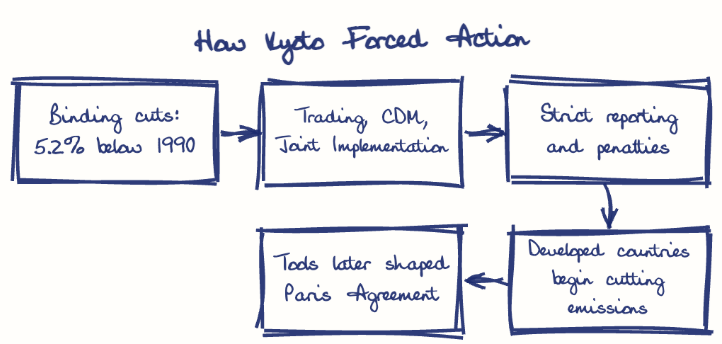
The Kyoto Protocol (1997, in force 2005) did force developed countries to begin emission controls, through binding targets, carbon markets such as the Clean Development Mechanism and compliance systems. Its target was a 5.2% cut below 1990 levels for 37 industrialised countries during 2008-2012, but US non-ratification limited its impact.
Model answer
Ghissu Editorial · Verified 4 Oct 2026 · 300 words
Binding Emission Targets and Market Mechanisms
Kyoto required 37 industrialized nations to reduce emissions by 5.2% below 1990 levels (2008-2012) and introduced International Emissions Trading, CDM, and Joint Implementation; India leveraged CDM for renewable energy projects benefiting Telangana through technology transfer and foreign investment.
Compliance Framework and Differentiated Responsibilities
It established strict reporting and penalties for non-compliance, ensuring transparency and incentivizing adherence. India’s role in defending developing countries’ exemption from binding targets emphasized equity and historical responsibility of developed nations.
Catalyst for Climate Action and Technology Transfer
Kyoto operationalized the UNFCCC by shifting from voluntary to enforceable commitments, increasing global mitigation efforts and promoting clean technology transfer to regions like Telangana, fostering sustainable development.
Participation and Equity Issues
US withdrawal and developing country exemptions caused enforcement weaknesses and accusations of "free-riding," complicating negotiations at Copenhagen and delaying broader commitments.
Focus on Mitigation Over Adaptation
Kyoto neglected adaptation, critical for vulnerable areas like Telangana facing drought and water scarcity, limiting its holistic environmental protection impact.
Inclusive Commitments and Integration
Future frameworks must bind all major emitters with equity and integrate adaptation with mitigation, supporting vulnerable regions through enhanced funding and technology support.
This model answer is indicative and the model can make mistakes; please verify key facts independently.
Practise this question
1Get the answer sheet
Sized for this question.
2Write your answer
Timed, by hand.
3Get it marked
Your score and what to fix.
This chapter in the exam
Global environmental issues: climate change, sustainable development2 questions
Asked in 1 of 2 sittings since 2016
Most tested: Effectiveness of international climate treaties, especially Kyoto Protocol and Paris Agreement.
Question from the official TGPSC Group-I Mains 2024 paper. Answer written by Ghissu's engine and checked against our editorial standards. Found an error? Tell us and we correct it within 48 hours.