"Proper functioning of various components of eco-system is the basis for maintaining pollution-free environment." Discuss.
In short
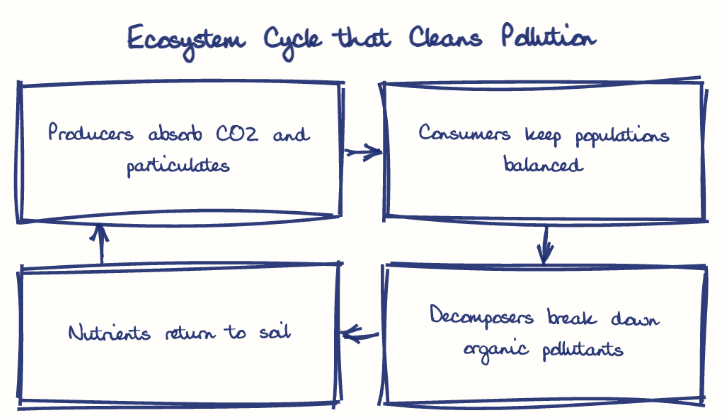
Producers, consumers and decomposers together regulate natural cycles, absorbing, transforming and recycling pollutants, so their proper functioning keeps the environment clean. Vegetation filters air, balanced food webs protect water bodies and decomposers break down waste, while deforestation and industrial effluents, as near Ramagundam, weaken these functions.
Model answer
Ghissu Editorial · Verified 4 Oct 2026 · 260 words
Producers Sustain Energy Flow
Plants and phytoplankton convert solar energy into biomass, forming the base of food chains; tank restoration under Mission Kakatiya has revived aquatic vegetation and ecosystem resilience.
Consumers Regulate Populations
Herbivores, carnivores and omnivores keep species in balance; apex predators in Kawal Wildlife Sanctuary check herbivore numbers and prevent overgrazing.
Decomposers Recycle Nutrients
Fungi and bacteria break down organic matter and waste, returning nutrients to the soil and reducing the need for chemical fertilisers.
Natural Filters
Vegetation absorbs carbon dioxide and particulate matter, and urban green spaces in Hyderabad complement the National Clean Air Programme, while wetlands absorb nutrients that would otherwise cause algal blooms.
Strains on Functions
Deforestation, habitat fragmentation and industrial effluents, as near Ramagundam, weaken these components and their pollution-control capacity.
Restore and Protect
Expand wetland and forest restoration, protect wildlife habitats, build green infrastructure into Hyderabad's growth and involve communities in monitoring pollution.
This model answer is indicative and the model can make mistakes; please verify key facts independently.
Practise this question
1Get the answer sheet
Sized for this question.
2Write your answer
Timed, by hand.
3Get it marked
Your score and what to fix.
This chapter in the exam
Ecosystems and biodiversity4 questions
Asked in 2 of 2 sittings since 2016
Most tested: Biodiversity conservation and its practical management
- 2024Evaluate the effectiveness of current biodiversity conservation strategies implemented in India in conserving endangered species.
- 2016Define bio-diversity and explain major threats to biodiversity.
All 4 questions, sorted by sub-topic, with model answers and practice.
Question from the official TGPSC Group-I Mains 2024 paper. Answer written by Ghissu's engine and checked against our editorial standards. Found an error? Tell us and we correct it within 48 hours.