"Telangana region in united Andhra Pradesh was not given due importance in allocation of funds by the successive governments during 1956-2014." Critically analyse.
In short
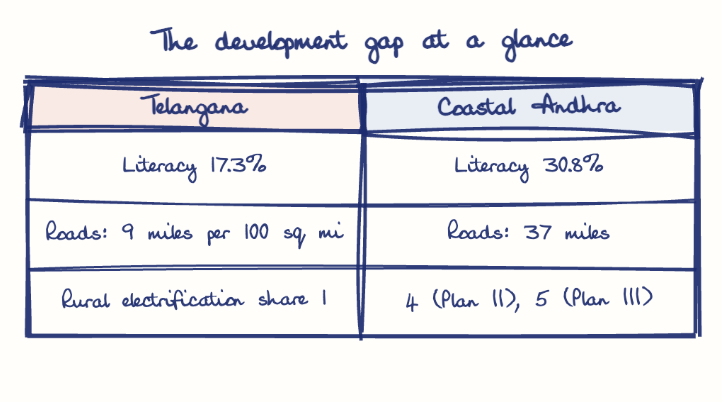
Evidence shows Telangana was systematically under-funded in united Andhra Pradesh, though its structural backwardness and weak absorptive capacity also played a part. Rural electrification favoured Andhra 4:1 in the Second Plan and 5:1 in the Third, and this neglect became a key force behind the statehood movement.
Model answer
Ghissu Editorial · Verified 4 Oct 2026 · 268 words
Disproportionate Development Indicators
Telangana lagged in literacy (17.3% vs. 30.8%) and road density (9 vs. 37 miles per 100 sq. miles), reflecting lower infrastructure investment. This gap was evident in lower per capita income and limited access to basic services.
Political Dominance of Andhra Leaders
Andhra political leadership controlled budgets, skewing fund allocation away from Telangana. The Mulki Rules protecting Telangana employment, though upheld by the Supreme Court in 1972, were diluted in practice and replaced by the Six-Point Formula in 1973, undermining local job security.
Weak Regional Safeguards
The Telangana Regional Committee failed to enforce the 1956 accord’s provisions on fund allocation and employment. Administrative centralization in Hyderabad benefited non-local elites, limiting fund flow to Telangana’s rural areas.
Rise of Separatist Sentiment
Economic grievances fueled the 1969 Telangana agitation and later movements demanding separate statehood. Social unrest and political instability disrupted governance and development efforts.
Decentralize Fiscal Powers
Empower Telangana local governments with fiscal autonomy and direct central funds access to reduce dependence on state-level allocations. Targeted investments in irrigation and social sectors are essential to bridge historical gaps.
This model answer is indicative and the model can make mistakes; please verify key facts independently.
Practise this question
1Get the answer sheet
Sized for this question.
2Write your answer
Timed, by hand.
3Get it marked
Your score and what to fix.
This chapter in the exam
Telangana economy: Hyderabad State, united AP, GSDP, poverty3 questions
Asked in 2 of 2 sittings since 2016
Most tested: Fiscal and structural analysis of Telangana’s economy in relation to united Andhra Pradesh and post-2014 state performance.
Question from the official TGPSC Group-I Mains 2024 paper. Answer written by Ghissu's engine and checked against our editorial standards. Found an error? Tell us and we correct it within 48 hours.