2013 · GS Paper 1 · Q9 · 10 marks
Analyze the circumstances that led to the Tashkent Agreement in 1966. Discuss the highlights of the Agreement.
In short
The 1965 war, triggered by Pakistan's Operation Gibraltar and ending in a UN ceasefire and stalemate, led to Soviet-mediated talks at Tashkent. The Declaration of 10 January 1966 restored pre-5 August 1965 positions, renounced force and normalised ties, so India returned the Haji Pir pass.
Model answer
Ghissu Editorial · Verified 4 Oct 2026 · 285 words
Pakistan's misreading
After India's 1962 defeat and Nehru's death in 1964, Pakistan judged India weak, and the Kutch clash of April 1965 emboldened it.
War in Kashmir
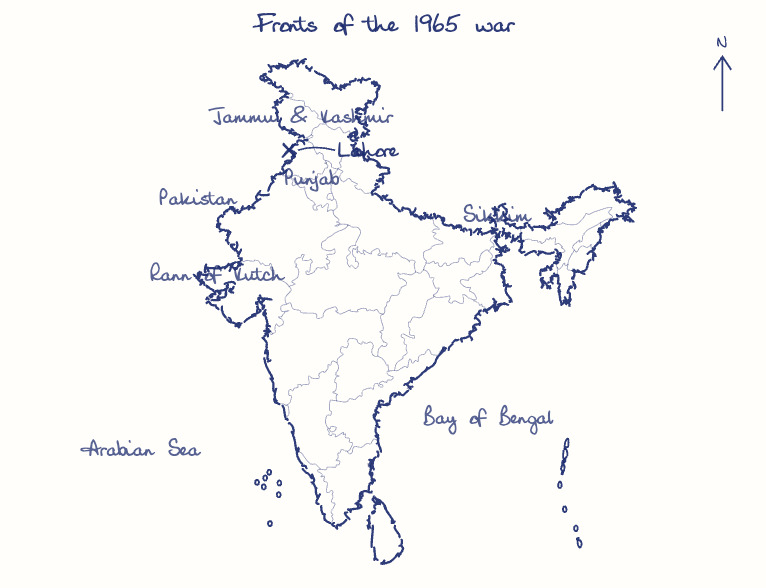
Operation Gibraltar sent infiltrators into Kashmir to spark a revolt and Operation Grand Slam struck at Akhnoor, so India opened the Punjab front towards Lahore on 6 September 1965.
Stalemate and pressure
UN Security Council Resolution 211 brought a ceasefire on 23 September, while a US arms cut-off and China's ultimatum to India raised the stakes.
Soviet opening
With the US absorbed in Vietnam, Premier Kosygin offered mediation, Moscow's first major diplomatic role in South Asia.
Withdrawal
Both armies would return to positions held before 5 August 1965, so India returned the Haji Pir pass.
Peaceful settlement
Both renounced force under the UN Charter and agreed to settle disputes peacefully, though each merely restated its stand on Kashmir.
Normalisation
Envoys, trade, communications and prisoners of war would be restored, and both pledged non-interference and an end to hostile propaganda.
This model answer is indicative and the model can make mistakes; please verify key facts independently.
Practise this question
1Get the answer sheet
Sized for this question.
2Write your answer
Timed, by hand.
3Get it marked
Your score and what to fix.
This chapter in the exam
Consolidation of Foreign Policy and External Security2 questions
Asked in 1 of 14 sittings since 2013
Question from the official UPSC Civil Services (Main) Examination 2013 paper. Answer written by Ghissu's engine and checked against our editorial standards. Found an error? Tell us and we correct it within 48 hours.