2013 · GS Paper 1 · Q10 · 10 marks
Critically examine the compulsions which prompted India to play a decisive role in the emergence of Bangladesh.
In short
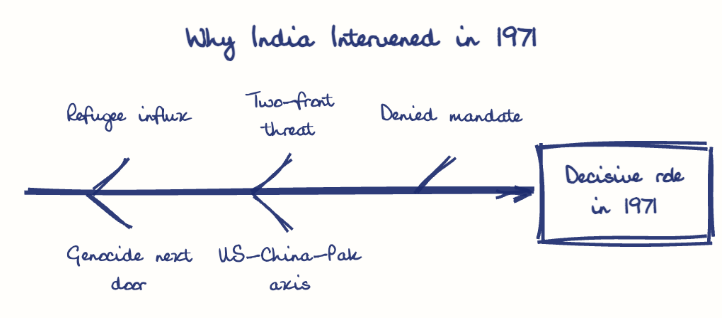
India's decisive role in creating Bangladesh was largely compelled by a refugee crisis, atrocities next door, a two-front threat and a US-China-Pakistan alignment, though strategic gain followed. Nearly ten million refugees entered India before Pakistan's air strikes of 3 December 1971 made war unavoidable.
Model answer
Ghissu Editorial · Verified 4 Oct 2026 · 277 words
Refugee burden
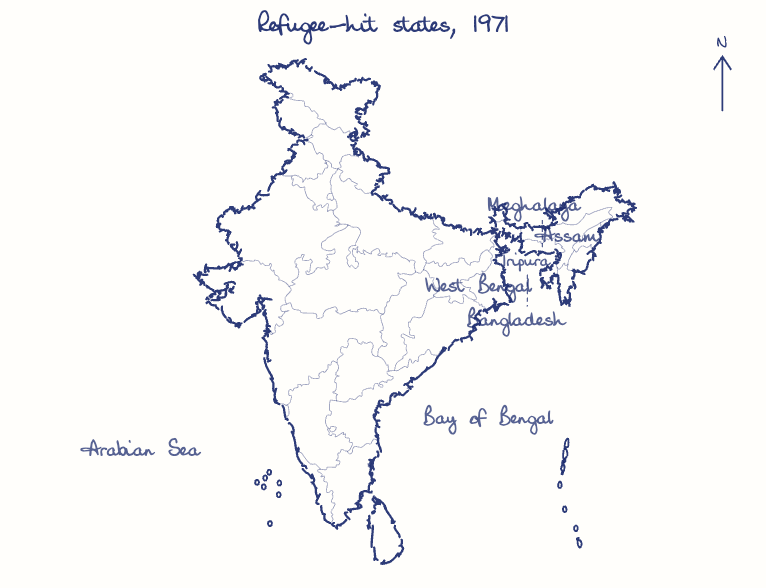
Nearly ten million refugees entered West Bengal, Tripura, Assam and Meghalaya, straining food, finances and the fragile North-East.
Humanitarian outrage
The crackdown was so brutal that the US consul in Dhaka, Archer Blood, cabled a dissent against his own government.
Security and geopolitics
A hostile East Pakistan could shelter North-East insurgents, Pakistan's air strikes of 3 December 1971 forced war, and Kissinger's secret trip to Beijing via Islamabad pushed India into the Indo-Soviet Treaty of August 1971.
Diplomacy first
Indira Gandhi appealed to the UN and toured Western capitals for months before force was used, despite the risk of superpower pressure.
Strategic gain
Critics argue that India trained the Mukti Bahini and seized the chance to split Pakistan, so interest and principle overlapped.
Restraint after victory
India declared a unilateral ceasefire in the West, withdrew from Bangladesh by March 1972 and signed the Simla Agreement, which blunts the charge of expansionism.
This model answer is indicative and the model can make mistakes; please verify key facts independently.
Practise this question
1Get the answer sheet
Sized for this question.
2Write your answer
Timed, by hand.
3Get it marked
Your score and what to fix.
This chapter in the exam
Consolidation of Foreign Policy and External Security2 questions
Asked in 1 of 14 sittings since 2013
Question from the official UPSC Civil Services (Main) Examination 2013 paper. Answer written by Ghissu's engine and checked against our editorial standards. Found an error? Tell us and we correct it within 48 hours.