2013 · GS Paper 1 · Q23(b) · 5 marks
Analyze the factors for the highly decentralized cotton textile industry in India.
In short
The cotton textile industry is highly decentralised because raw cotton is a pure raw material, cloth has a nationwide market and looms need little capital. The 1982 Great Bombay Textile Strike and handloom reservation pushed output from Mumbai mills to powerloom towns like Bhiwandi and Malegaon.
Model answer
Ghissu Editorial · Verified 4 Oct 2026 · 262 words
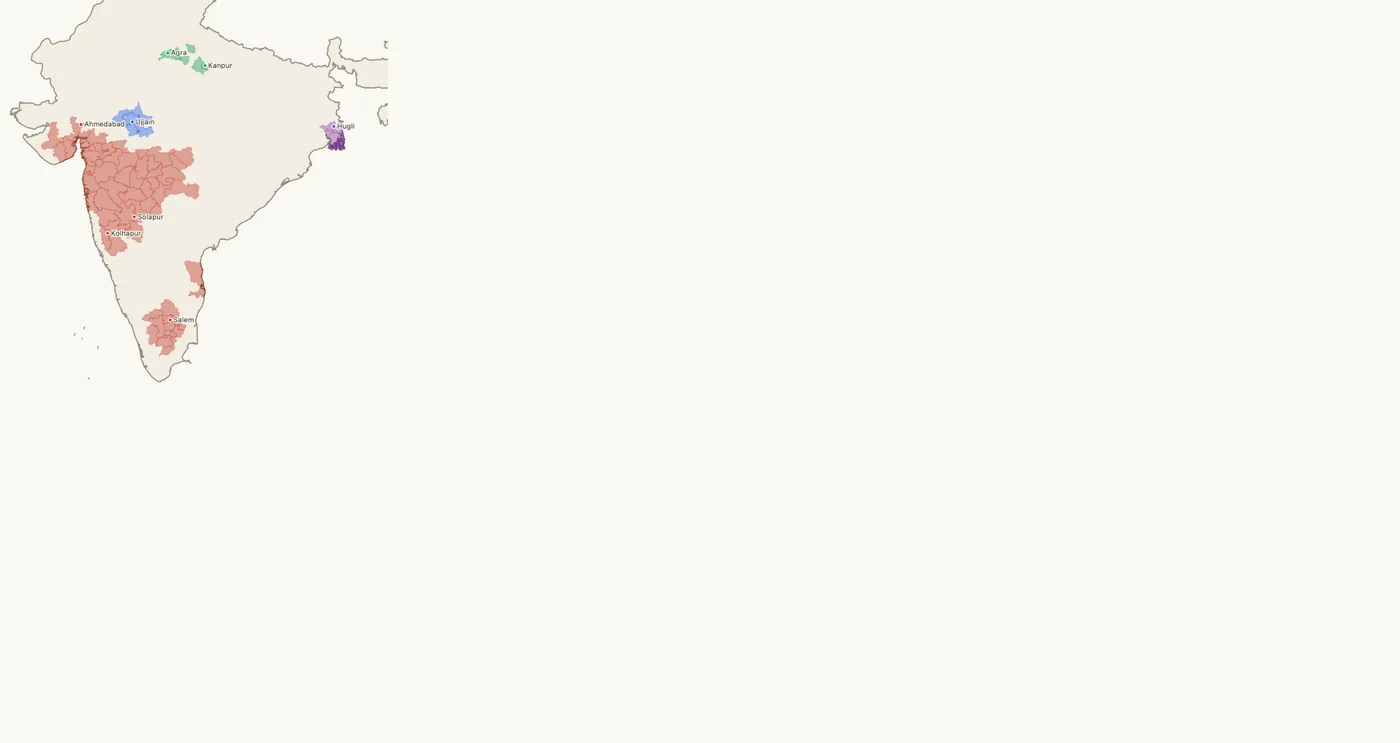
Pure raw material
Raw cotton loses almost no weight in processing, so mills can locate near markets, labour or power rather than near cotton fields.
Ubiquitous market
Cloth is demanded everywhere, which pulled mills to Kanpur, Indore, Nagpur, Solapur and the Hugli belt.
Power and rail
Pykara hydel power made Coimbatore the "Manchester of South India", while railways moved cotton and cloth across regions.
Wide cotton belt
Cotton grows in Gujarat, Maharashtra, Telangana, Karnataka, Punjab and Haryana, so raw material is available in many places.
Simple technology
Looms need little capital and run even in homes, so small units spread across Bhiwandi, Malegaon, Ichalkaranji and Panipat.
Decline of Mumbai mills
High costs and the Great Bombay Textile Strike of 1982 shifted output to cheaper powerloom towns.
Protective policy
Small-scale reservation and the Handlooms (Reservation of Articles for Production) Act, 1985 shielded the decentralised sector.
Cluster specialisation
Tiruppur's cotton knitwear cluster shows small firms growing exports without composite mills.
This model answer is indicative and the model can make mistakes; please verify key facts independently.
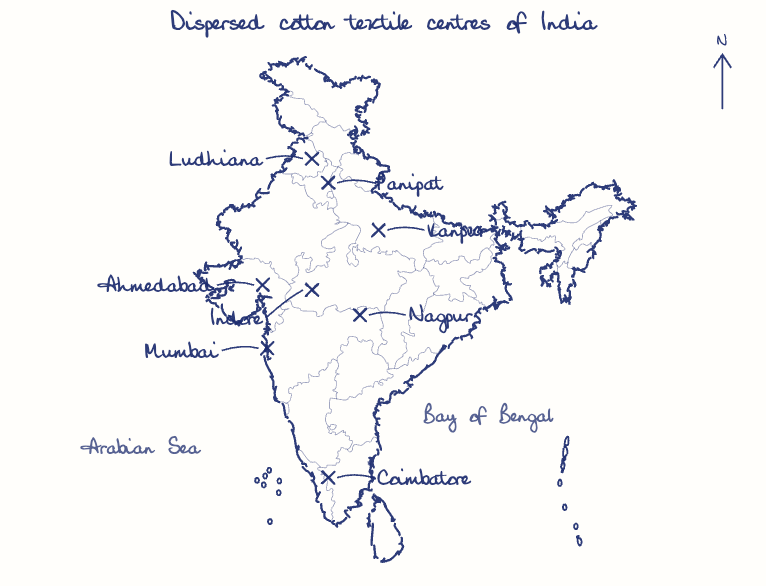
Practise this question
1Get the answer sheet
Sized for this question.
2Write your answer
Timed, by hand.
3Get it marked
Your score and what to fix.
This chapter in the exam
International Trade / Transport and Activities12 questions
Asked in 9 of 14 sittings since 2013
- 2026"The centre of global trade is gradually shifting from the Atlantic region to the Indo-Pacific region." Examine this statement.
- 2022Mention the significance of straits and isthmus in international trade.
All 12 questions, sorted by sub-topic, with model answers and practice.
Question from the official UPSC Civil Services (Main) Examination 2013 paper. Answer written by Ghissu's engine and checked against our editorial standards. Found an error? Tell us and we correct it within 48 hours.