2013 · GS Paper 1 · Q20(b) · 5 marks
What do you understand by the phenomenon of temperature inversion in meteorology? How does it affect weather and the habitants of the place?
In short
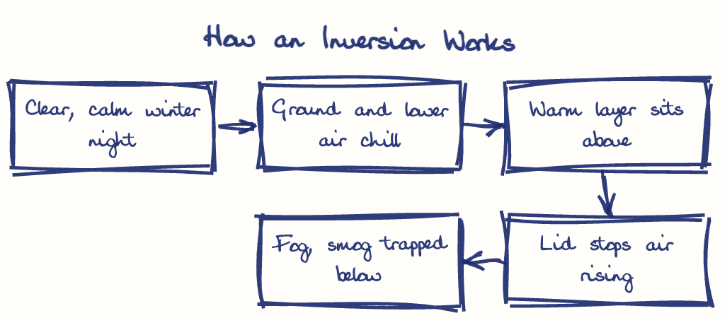
A temperature inversion is a reversal of the normal fall of temperature with height, formed on clear calm nights, in valleys and at fronts, and it stabilises the air, causing fog, smog and frost. It traps pollutants that drive Delhi's winter smog and pushes hill settlements to the warmer middle slopes.
Model answer
Ghissu Editorial · Verified 4 Oct 2026 · 262 words
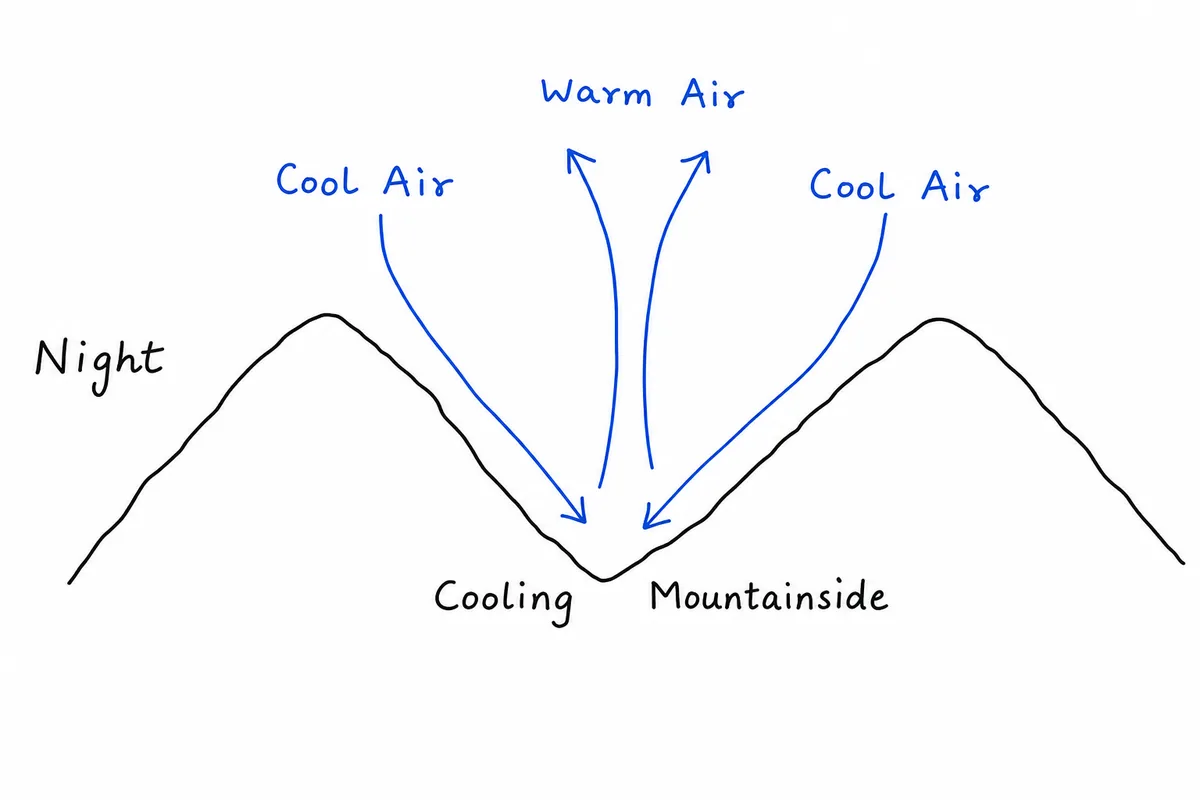
Radiation inversion
Long, clear, calm winter nights let the ground lose heat fast and chill the air above it, as over the north Indian plains.
Valley inversion
Cold dense air drains down slopes at night and pools on valley floors beneath warmer air, as in Himalayan and Alpine valleys.
Frontal and advection inversion
Warm air rides over a cold air mass at a front, or passes over a cold surface or current, as off coastal California.
Stable weather
The inversion stops air from rising, so convection, clouds and rain are suppressed and the weather stays dry and settled.
Fog and smog
Trapped moisture and pollutants cause dense winter fog in the Indo-Gangetic plain and Delhi's severe winter smog, as in London's Great Smog of 1952.
Frost and farming
Valley-floor frost damages crops, so orchards, tea gardens and settlements occupy the warmer middle slopes, the thermal belt.
Health and transport
Trapped pollutants worsen respiratory illness, while fog delays flights and trains across north India.
This model answer is indicative and the model can make mistakes; please verify key facts independently.
Practise this question
1Get the answer sheet
Sized for this question.
2Write your answer
Timed, by hand.
3Get it marked
Your score and what to fix.
This chapter in the exam
Climate8 questions
Asked in 7 of 14 sittings since 2013
- 2026Compare the Loo, Chinook and Foehn winds with respect to their regions of prevalence, their nature and climatic impacts.
- 2024What are aurora australis and aurora borealis? How are these triggered?
All 8 questions, sorted by sub-topic, with model answers and practice.
Question from the official UPSC Civil Services (Main) Examination 2013 paper. Answer written by Ghissu's engine and checked against our editorial standards. Found an error? Tell us and we correct it within 48 hours.