2013 · GS Paper 2 · Q2 · 10 marks
Discuss Section 66A of IT Act, with reference to its alleged violation of Article 19 of the Constitution.
In short
Section 66A of the IT Act was alleged to violate Article 19 because its vague terms like annoyance and gross offence fall outside the eight grounds of Article 19(2) and chilled online speech. The Supreme Court struck it down in Shreya Singhal (2015).
Model answer
Ghissu Editorial · Verified 4 Oct 2026 · 278 words
Section 66A of the IT Act, added in 2008, punished online messages that were "grossly offensive" or "menacing", or false and sent to cause annoyance or insult, with up to three years in jail. Arrests over posts in 2012 made it a test of Article 19.
Why Section 66A Is Alleged to Violate Article 19
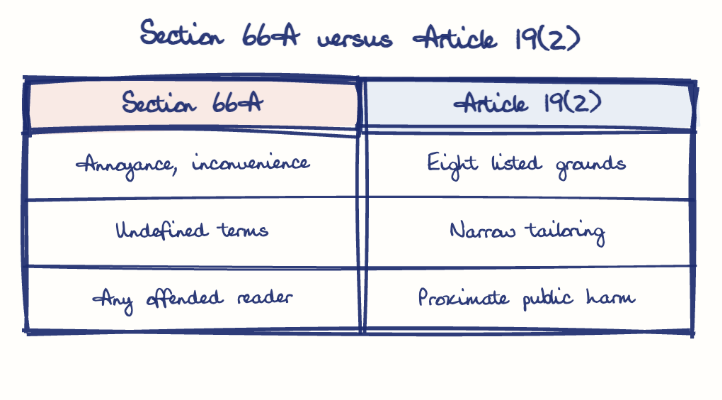
Section 66A versus Article 19(2) a: Section 66A b: Article 19(2) → Annoyance, inconvenience :: Eight listed grounds → Undefined terms :: Narrow tailoring → Any offended reader :: Proximate public harm
1. Outside Article 19(2): Annoyance, inconvenience and insult are not among the eight grounds on which speech may be restricted. 2. Vague and overbroad: Undefined terms like "grossly offensive" let police decide what is a crime, catching legitimate criticism along with threats. 3. Chilling effect: The 2012 arrests of two Palghar women over a Facebook post and of professor Ambikesh Mahapatra over a cartoon made citizens censor themselves.
Genuine harms
The State cited cyberbullying, threats and rumours, such as the morphed images behind the 2012 exodus of North Eastern people from Bengaluru.
Executive safeguard
A January 2013 advisory required senior police approval before registering cases, but left the text untouched.
Struck down
Shreya Singhal (2015) struck down Section 66A, protecting discussion and advocacy and allowing curbs only on incitement; in 2022 the Court barred any further prosecutions under it.
This model answer is indicative and the model can make mistakes; please verify key facts independently.
Practise this question
1Get the answer sheet
Sized for this question.
2Write your answer
Timed, by hand.
3Get it marked
Your score and what to fix.
This chapter in the exam
Significant Provisions — Fundamental Rights9 questions
Asked in 8 of 14 sittings since 2013
- 2026Right to privacy relating to self-identity is very dear to every human being and well protected under Article 21 of the Constitution. In this context, examine the effect of the amendment in 2026, to the Transgender Persons (Protection of Rights) Act, 2019.
- 2024Right to privacy is intrinsic to life and personal liberty and is inherently protected under Article 21 of the constitution. Explain. In this reference discuss the law relating to D.N.A. testing of child in the womb to establish paternity.
All 9 questions, sorted by sub-topic, with model answers and practice.
Question from the official UPSC Civil Services (Main) Examination 2013 paper. Answer written by Ghissu's engine and checked against our editorial standards. Found an error? Tell us and we correct it within 48 hours.