2024 · GS Paper 2 · Q12 · 15 marks
Right to privacy is intrinsic to life and personal liberty and is inherently protected under Article 21 of the constitution. Explain. In this reference discuss the law relating to D.N.A. testing of child in the womb to establish paternity.
In short
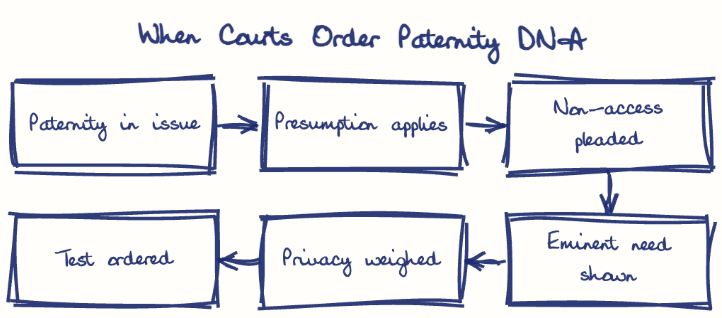
Privacy is intrinsic to Article 21 under Puttaswamy (2017), so a DNA test of a child in the womb is ordered only on eminent need, given the presumption of legitimacy and prenatal testing limits. Ivan Rathinam (2025) requires courts to weigh the child's privacy against the need for truth.
Model answer
Ghissu Editorial · Verified 4 Oct 2026 · 274 words
Dignity and liberty
A life of dignity, recognised since Francis Coralie Mullin (1981), needs a protected inner zone, which Puttaswamy split into bodily, informational and decisional privacy.
Reproductive autonomy
Suchita Srivastava (2009) made a woman's reproductive choice part of personal liberty, subject to Puttaswamy's proportionality test.
Presumption of legitimacy
Section 116 of the Bharatiya Sakshya Adhiniyam 2023 (formerly Section 112, Evidence Act) presumes a child born in wedlock legitimate, so Goutam Kundu (1993) barred roving DNA inquiries.
Eminent need
Bhabani Prasad Jena (2010) and Ivan Rathinam (2025) allow a test only on a strong prima facie case, weighing the child's privacy and dignity against the need for truth.
Prenatal limits
The PCPNDT Act 1994 permits prenatal techniques only for listed abnormalities and invasive sampling risks miscarriage, so courts rarely compel it, drawing an adverse inference from refusal instead (Sharda v. Dharmpal, 2003).
This model answer is indicative and the model can make mistakes; please verify key facts independently.
Practise this question
1Get the answer sheet
Sized for this question.
2Write your answer
Timed, by hand.
3Get it marked
Your score and what to fix.
This chapter in the exam
Significant Provisions — Fundamental Rights9 questions
Asked in 8 of 14 sittings since 2013
- 2026Right to privacy relating to self-identity is very dear to every human being and well protected under Article 21 of the Constitution. In this context, examine the effect of the amendment in 2026, to the Transgender Persons (Protection of Rights) Act, 2019.
- 2023The Constitution of India is a living instrument with capabilities of enormous dynamism. It is a constitution made for a progressive society. Illustrate with special reference to the expanding horizons of the right to life and personal liberty.
All 9 questions, sorted by sub-topic, with model answers and practice.
Question from the official UPSC Civil Services (Main) Examination 2024 paper. Answer written by Ghissu's engine and checked against our editorial standards. Found an error? Tell us and we correct it within 48 hours.