2026 · GS Paper 2 · Q1 · 10 marks
Right to privacy relating to self-identity is very dear to every human being and well protected under Article 21 of the Constitution. In this context, examine the effect of the amendment in 2026, to the Transgender Persons (Protection of Rights) Act, 2019.
In short
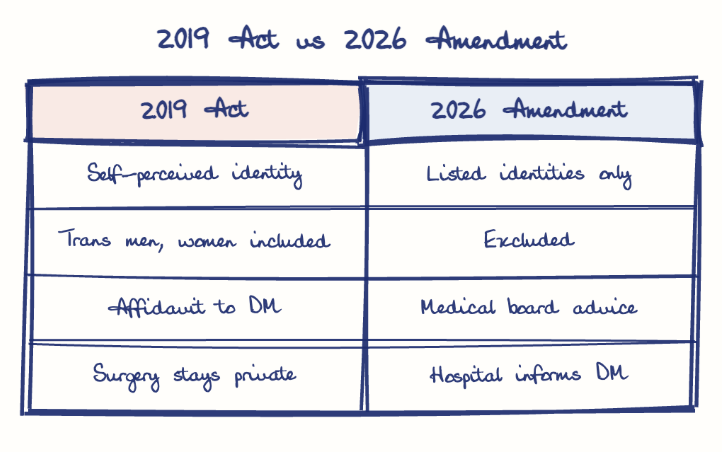
The 2026 Amendment curbs coerced transition but weakens the Article 21 privacy of self-identity by replacing self-perceived gender with listed identities and medical board scrutiny. It deletes Section 4(2)'s right to self-perceived gender identity, which NALSA (2014) had grounded in Articles 14, 19 and 21.
Model answer
Ghissu Editorial · Verified 4 Oct 2026 · 290 words
Stated purpose
The Government framed it as targeting benefits at genuinely vulnerable kinner, hijra, aravani and jogta communities and persons with intersex variations, groups its Statement of Objects and Reasons says face real social disadvantage.
Tougher penalties
Forcing anyone into a transgender identity through kidnapping or grievous hurt now draws 10 years to life imprisonment.
Self-determination reversed
Deleting the right to self-perceived identity in Section 4(2) overturns NALSA's rule that the person, not a doctor, decides gender.
Bodily and informational privacy
A medical board's scrutiny and hospital reporting of surgery to the District Magistrate intrude on intimate data without Puttaswamy's proportionality safeguards.
Equality concerns
Excluding trans men, trans women and self-identified persons denies them recognition and welfare access, raising Articles 14 and 15 questions.
Dignity and autonomy
Navtej Singh Johar (2018) held that identity is integral to dignity, so making recognition depend on a medical verdict sits uneasily with Article 21.
This model answer is indicative and the model can make mistakes; please verify key facts independently.
Practise this question
1Get the answer sheet
Sized for this question.
2Write your answer
Timed, by hand.
3Get it marked
Your score and what to fix.
This chapter in the exam
Significant Provisions — Fundamental Rights9 questions
Asked in 8 of 14 sittings since 2013
- 2024Right to privacy is intrinsic to life and personal liberty and is inherently protected under Article 21 of the constitution. Explain. In this reference discuss the law relating to D.N.A. testing of child in the womb to establish paternity.
- 2023The Constitution of India is a living instrument with capabilities of enormous dynamism. It is a constitution made for a progressive society. Illustrate with special reference to the expanding horizons of the right to life and personal liberty.
All 9 questions, sorted by sub-topic, with model answers and practice.
Question from the official UPSC Civil Services (Main) Examination 2026 paper. Answer written by Ghissu's engine and checked against our editorial standards. Found an error? Tell us and we correct it within 48 hours.