2013 · GS Paper 3 · Q20 · 10 marks
Enumerate the National Water Policy of India. Taking river Ganges as an example, discuss the strategies which may be adopted for river water pollution control and management. What are the legal provisions of management and handling of hazardous wastes in India ?
In short
The National Water Policy 2012 treats water as a public trust, Namami Gange tackles Ganga sewage, industry and flow, and the Environment (Protection) Act with the 2016 Hazardous Waste Rules governs toxic waste. Grossly polluting industries' compliance on the Ganga rose from 39% in 2017 to 83% in 2024.
Model answer
Ghissu Editorial · Verified 4 Oct 2026 · 274 words
NWP Features
It treats water as a public trust resource, puts drinking water, sanitation and ecological flow first, and proposes volumetric pricing, state Water Regulatory Authorities and basin-level planning.
Sewage Treatment
Namami Gange (2014, extended to March 2026 with ₹22,500 crore) builds treatment plants under the Hybrid Annuity Model, tying operator payments to performance.
Industrial Discipline
Under online monitoring and zero liquid discharge norms, compliance of grossly polluting industries rose from 39% in 2017 to 83% in 2024 (CPCB).
Flow and Farming
The 2018 e-flow notification fixes minimum upper Ganga flows, while Arth Ganga promotes natural farming on the banks.
Umbrella Statute
Section 8 of the Environment (Protection) Act 1986 bars handling hazardous substances without prescribed safeguards.
Waste Rules
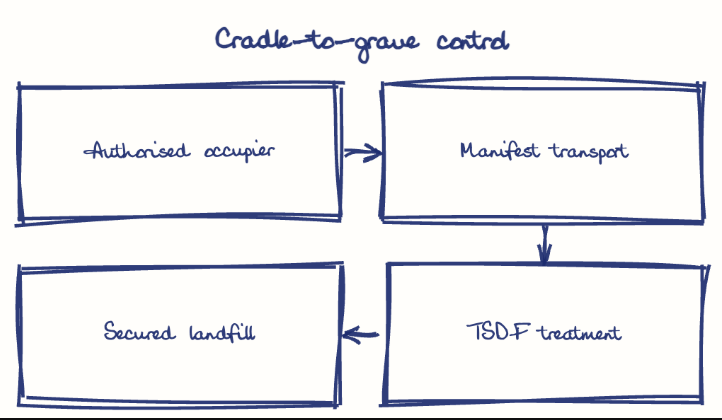
The Hazardous and Other Wastes Rules 2016, successor to the 2008 Rules, require State Pollution Control Board authorisation and a reuse-first hierarchy.
Liability and Treaty
The Public Liability Insurance Act 1991 and the absolute liability rule of *M.C. Mehta* (1987) make polluters pay, while the 2016 Rules, in line with the Basel Convention, ban import of hazardous waste for disposal.
This model answer is indicative and the model can make mistakes; please verify key facts independently.
Practise this question
1Get the answer sheet
Sized for this question.
2Write your answer
Timed, by hand.
3Get it marked
Your score and what to fix.
This chapter in the exam
Environmental Pollution and Degradation13 questions
Asked in 11 of 14 sittings since 2013
- 2026What are the challenges to solid waste management in India? Discuss the governmental policy framework on solid waste management. Discuss the success/failure cases of Delhi and Indore cities highlighting the salient feature of their solid waste management initiatives. (Answer in 250 words)
- 2025Examine the factors responsible for depleting groundwater in India. What are the steps taken by the government to mitigate such depletion of groundwater ?
All 13 questions, sorted by sub-topic, with model answers and practice.
Question from the official UPSC Civil Services (Main) Examination 2013 paper. Answer written by Ghissu's engine and checked against our editorial standards. Found an error? Tell us and we correct it within 48 hours.