2013 · GS Paper 4 · Q5(a) · 10 marks
What do you understand by the term 'voice of conscience'? How do you prepare yourself to heed to the voice of conscience?
In short
The voice of conscience is the inner moral judge, built from values and experience, that tells us whether an act is right or wrong. One prepares to heed it through daily reflection, values fixed in advance, emotional regulation and moral courage practised in small acts.
Model answer
Ghissu Editorial · Verified 4 Oct 2026 · 265 words
An inner judge
Unlike law, conscience binds from within and acts as a Residual Guide where rules are silent.
Shaped by experience
Family, education and shocks mould it, as Ashoka's remorse after Kalinga, recorded in Rock Edict XIII, turned him to Dhamma.
Clearest under pressure
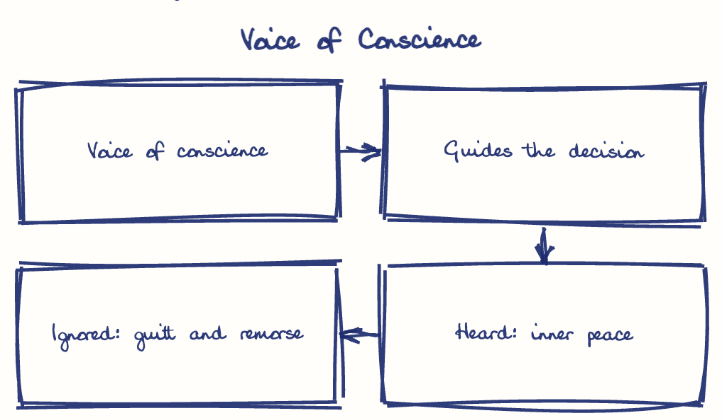
It speaks loudest in moments of fear or temptation; ignored, it splits knowing from doing and ends in guilt.
Daily self-reflection
Introspection and silence sharpen it, as in Gandhi's weekly day of silence and Socrates' view that "the unexamined life is not worth living".
Values fixed in advance
Setting non-negotiables, such as never signing an unread file, and applying Gandhi's Talisman keep it clear under pressure.
Emotional regulation
Self-awareness separates conscience from fear and Authority Bias, the habit of handing judgement to seniors.
Moral courage through practice
Small acts build strength, as Satyendra Dubey showed in flagging Golden Quadrilateral corruption to the PMO in 2002.
This model answer is indicative and the model can make mistakes; please verify key facts independently.
Practise this question
1Get the answer sheet
Sized for this question.
2Write your answer
Timed, by hand.
3Get it marked
Your score and what to fix.
This chapter in the exam
Laws, rules, regulations and conscience as sources of ethical guidance16 questions
Asked in 9 of 14 sittings since 2013
- 2026Dr. B. R. Ambedkar had cautioned that employing civil disobedience within a constitutional democracy equates to endorsing 'anarchy'. How should modern democracies navigate the ethical dilemmas posed by civil disobedience movements that aim to promote social justice against policies that may raise genuine concerns?
- 2026Usually schools, working in remote areas, do not fully comply with government regulations. However, if the rules are enforced strictly, it would lead to most schools closing down. How should an administrator strike a balance between enforcement of rules and educational rights of children?
All 16 questions, sorted by sub-topic, with model answers and practice.
Question from the official UPSC Civil Services (Main) Examination 2013 paper. Answer written by Ghissu's engine and checked against our editorial standards. Found an error? Tell us and we correct it within 48 hours.