2014 · GS Paper 1 · Q24 · 10 marks
Critically evaluate the various resources of the oceans which can be harnessed to meet the resource crisis in the world.
In short
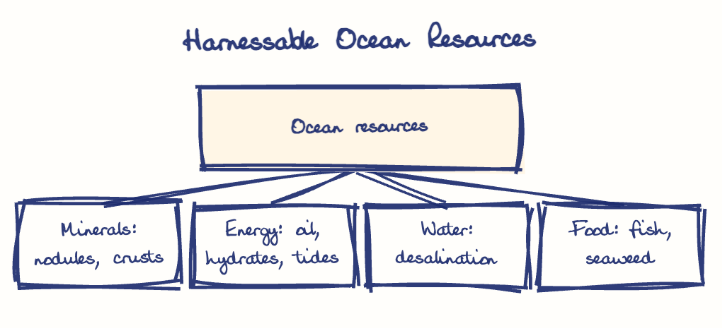
Ocean minerals, energy, desalinated water and food can ease the global resource crisis only partially, because overfishing, fragile deep-sea ecosystems, high costs and weak governance limit their use. The FAO (2024) found 37.7% of assessed fish stocks overfished.
Model answer
Ghissu Editorial · Verified 4 Oct 2026 · 277 words
Critical minerals
Polymetallic nodules carry nickel, cobalt and copper, and India explores a 75,000 sq km Central Indian Ocean block under an International Seabed Authority contract, backed by the Deep Ocean Mission (2021).
Energy and water
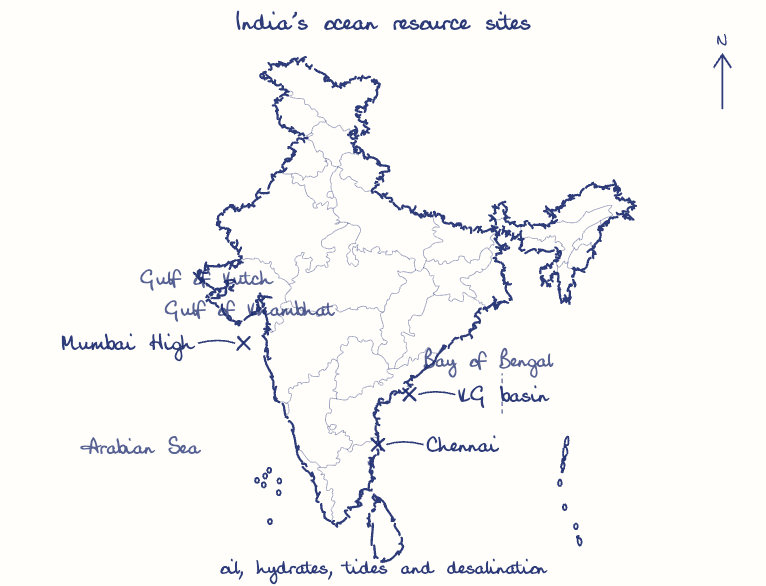
Offshore Mumbai High yields oil and gas, the Krishna-Godavari basin holds gas hydrates, and Chennai's Minjur and Nemmeli plants desalinate seawater.
Food
Aquatic animal food consumption rose from 9.1 kg per person in 1961 to 20.7 kg in 2022 (FAO, 2024).
Overfishing
The FAO (2024) found 37.7% of assessed stocks overfished, so wild catch cannot simply keep growing.
Fragile deep sea
Nodule mining stirs sediment plumes over ecosystems that recover over centuries, and more than 30 countries back a precautionary pause.
Cost
Desalination is energy-hungry and dumps brine, the Kutch tidal plant stalled on cost, and gas hydrates remain uncommercial.
Governance
UNCLOS makes the deep seabed the common heritage of mankind, and the High Seas Treaty (in force 2026) seeks fair sharing of marine genetic resources.
This model answer is indicative and the model can make mistakes; please verify key facts independently.
Practise this question
1Get the answer sheet
Sized for this question.
2Write your answer
Timed, by hand.
3Get it marked
Your score and what to fix.
This chapter in the exam
Resources and planning38 questions
Asked in 14 of 14 sittings since 2013
- 2026"Water resources are both an asset and a source of conflict in South Asia." Examine this statement giving examples.
- 2026Analyze the role of satellite-based technologies in achieving climate-smart agriculture and food security in India.
All 38 questions, sorted by sub-topic, with model answers and practice.
Question from the official UPSC Civil Services (Main) Examination 2014 paper. Answer written by Ghissu's engine and checked against our editorial standards. Found an error? Tell us and we correct it within 48 hours.