2015 · GS Paper 1 · Q9 · 12 marks
Critically examine whether growing population is the cause of poverty OR poverty is the main cause of population increase in India.
In short
Population growth aggravates poverty through land dilution and surplus labour, but poverty is the main cause of high fertility through child mortality, insecurity and low female schooling. NFHS-5 records a TFR of about 2.6 in the poorest wealth quintile against 1.6 in the richest.
Model answer
Ghissu Editorial · Verified 4 Oct 2026 · 269 words
Resource dilution
Average farm holdings fell to 1.08 hectares (Agriculture Census 2015-16), trapping families in low-productivity farming.
Surplus labour and services
Young entrants outpace formal jobs and crowd into informal work, the 'reserve army of labour' Marx said keeps wages low, while fast-growing states like Bihar stretch schools and hospitals thin.
Ecological strain
Pressure on groundwater, forests and village commons hurts the rural poor first, because they depend on them most.
Insurance births and child labour
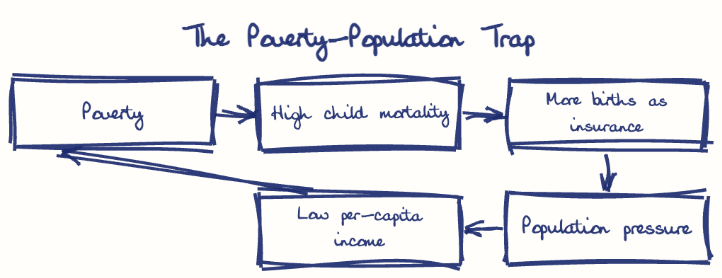
High child mortality and the need for early earners and old-age support make large families rational for the poor.
Education gap
NFHS-5 (2019-21) records a TFR of about 2.6 in the poorest wealth quintile against 1.6 in the richest, with a similar gap by women's schooling.
Regional proof
Kerala reached replacement fertility by the late 1980s through female literacy despite modest incomes, while Bihar has the highest TFR (3.0) and the highest multidimensional poverty headcount (NITI MPI, 2023).
This model answer is indicative and the model can make mistakes; please verify key facts independently.
Practise this question
1Get the answer sheet
Sized for this question.
2Write your answer
Timed, by hand.
3Get it marked
Your score and what to fix.
This chapter in the exam
Population and associated issues5 questions
Asked in 4 of 14 sittings since 2013
- 2026Critically examine the challenges of demographic transition in contemporary India.
- 2021Discuss the main objectives of Population Education and point out the measures to achieve them in India in detail.
All 5 questions, sorted by sub-topic, with model answers and practice.
Question from the official UPSC Civil Services (Main) Examination 2015 paper. Answer written by Ghissu's engine and checked against our editorial standards. Found an error? Tell us and we correct it within 48 hours.