2015 · GS Paper 4 · Q4(b) · 10 marks
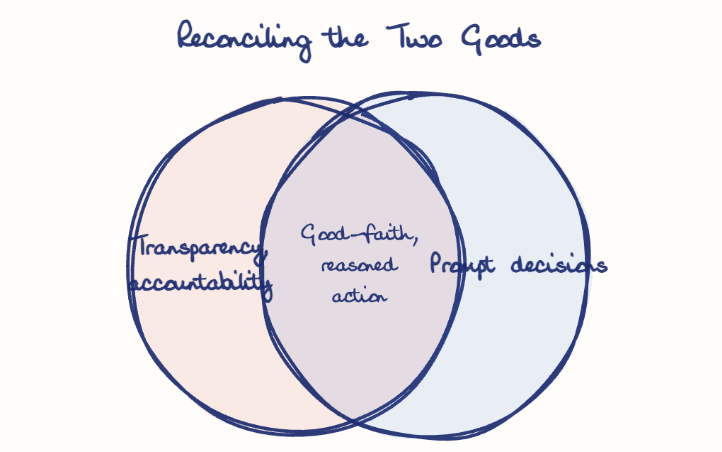
Some recent developments such as introduction of RTI Act, media and judicial activism, etc., are proving helpful in bringing about greater transparency and accountability in the functioning of the government. However, it is also being observed that at times the mechanisms are misused. Another negative effect is that the officers are now afraid to take prompt decisions. Analyze this situation in detail and suggest how this dichotomy can be resolved. Suggest how these negative impacts can be minimized.
In short
The RTI Act, media and judicial activism have improved transparency, but misuse and fear of prosecution have bred defensive, delayed decisions. Section 17A of the Prevention of Corruption Act (2018), proactive disclosure and reasons recorded on file protect good-faith decisions while keeping scrutiny.
Model answer
Ghissu Editorial · Verified 4 Oct 2026 · 278 words
Real gains
RTI applications exposed the Adarsh Housing Society scam, and the Supreme Court cancelled 214 coal block allocations in Manohar Lal Sharma (2014).
Misuse of RTI
In CBSE v. Aditya Bandopadhyay (2011) the Court warned that indiscriminate demands could swamp public authorities, and some applications aim at blackmail.
Media trials and frivolous PILs
Verdicts pronounced before investigation, and publicity PILs curbed in Balwant Singh Chaufal (2010), punish honest error along with corruption.
Fear of deciding
After the coal cases and the 2017 conviction of former Coal Secretary H.C. Gupta, officers began pushing files to committees, and policy paralysis followed.
Protect bona fide decisions
Section 17A, added to the Prevention of Corruption Act in 2018, requires prior approval before investigating decisions taken in official duty.
Disclose proactively
Fuller disclosure under Section 4 of the RTI Act cuts repetitive applications, and fully staffed information commissions can weed out vexatious ones.
Fair scrutiny
Postponement orders against prejudicial reporting, upheld in Sahara v. SEBI (2012), keep media coverage fair.
Record reasons
Reasons noted on file at the time of decision become the officer's best defence.
This model answer is indicative and the model can make mistakes; please verify key facts independently.
Practise this question
1Get the answer sheet
Sized for this question.
2Write your answer
Timed, by hand.
3Get it marked
Your score and what to fix.
This chapter in the exam
Information sharing and transparency in government; Right to Information4 questions
Asked in 4 of 14 sittings since 2013
- 2019There is a view that the Official Secrets Act is an obstacle to the implementation of Right to Information Act. Do you agree with the view? Discuss.
- 2018"The Right to Information Act is not all about citizens' empowerment alone, it essentially redefines the concept of accountability." Discuss.
All 4 questions, sorted by sub-topic, with model answers and practice.
Question from the official UPSC Civil Services (Main) Examination 2015 paper. Answer written by Ghissu's engine and checked against our editorial standards. Found an error? Tell us and we correct it within 48 hours.